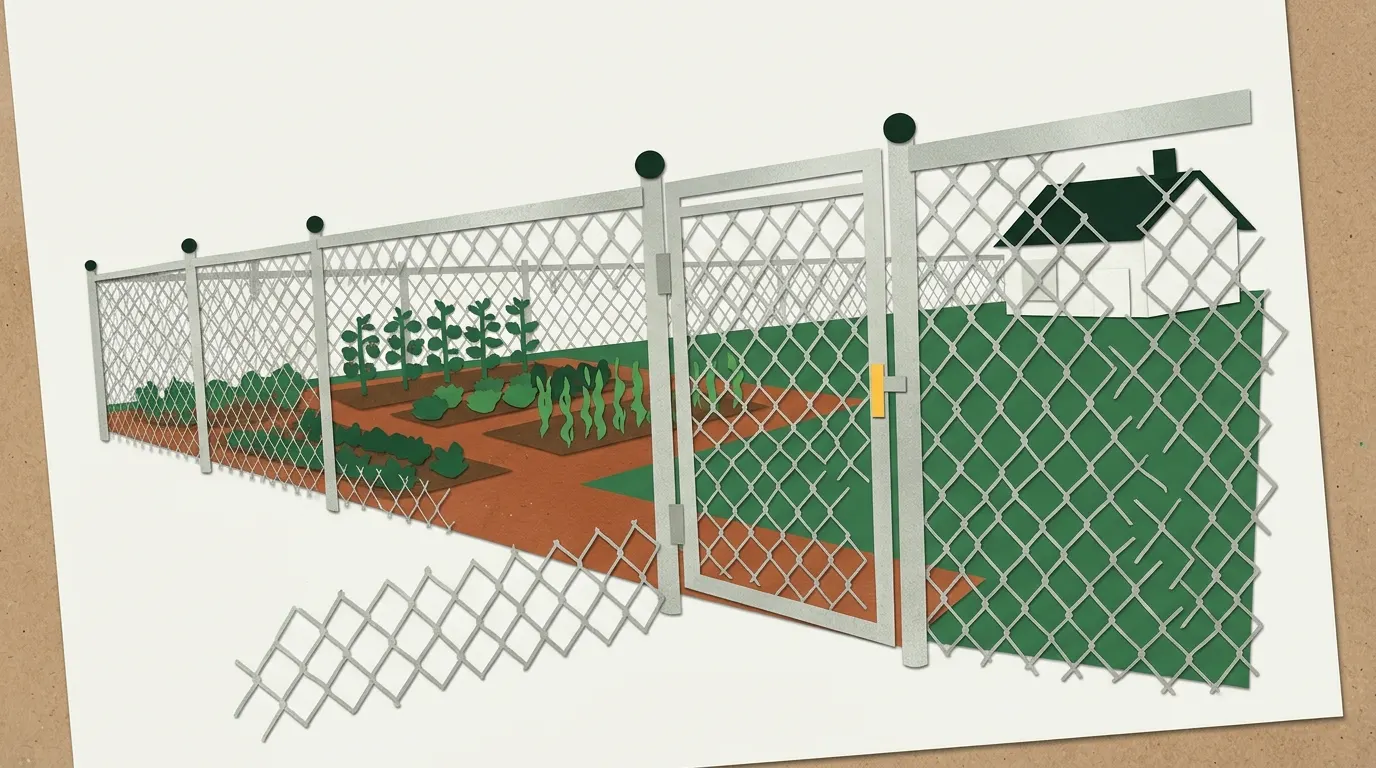
This page is about chain link fences alone. To weigh chain link against wood, vinyl, aluminum and composite in one place, open the main fence cost calculator. Chain link is woven steel wire stretched between metal posts, and it's the budget choice for keeping pets and kids in a yard.
National ballpark · 150 linear ft of 6-ft chain link fence with one gate
This is a planning range, not a quote.
Limited data: chain link gate price (adjusted range). The real range may be wider.
| Cost | Low | Typical | High |
|---|---|---|---|
| Materials | $650 | $1,480 | $2,450 |
| Labor | $650 | $1,480 | $2,450 |
| Permit (varies by city) national | $28 | $100 | $180 |
| Total | $1,330 | $3,050 | $5,080 |
How the chain link fence cost calculator works
The material here is set to chain link. Fill in your ZIP code, the length of your fence line, the height, how many gates you need and whether an old fence has to come out. The calculator multiplies your length by an installed chain link price per foot, applies a height factor for 8 feet, adds a chain link gate for each gate, adds tear-out if you ask for it and adjusts the total for wages and prices in your state.
For the 150-foot example, the breakdown lists materials and labor at $650–$2,450 each, typical $1,480, plus the permit at $28–$180, typical $100. The calculator splits the installed price evenly, based on one source that puts labor near 50% of a fence job. Permit fees stay at national levels, since cities set them. The details are on How we calculate.
Chain link fence cost per linear foot
Installed, chain link runs $8–$30 per linear foot, typical $19, from five sources. The low end is far below any other fence we track; the next cheapest starts at $18 a foot. The high end overlaps wood, vinyl and composite.
| Option | Low | Typical | High | Unit |
|---|---|---|---|---|
| Wood privacy | $18 | $21 | $45 | /linear ft |
| Vinyl | $20 | $30 | $40 | /linear ft |
| Chain link | $8.00 | $19 | $30 | /linear ft |
| Aluminum | $22 | $36 | $50 | /linear ft |
| Composite | $20 | $33 | $45 | /linear ft |
The width of that range comes from what "chain link" covers. At the low end is thin galvanized mesh on light posts, the kind seen around many backyards. Toward the high end are thicker wire, heavier posts, vinyl-coated mesh in black or green, and taller commercial-style fences. Our data doesn't split those apart, so ask each installer to name the wire gauge (thickness, where a lower number means thicker wire), the coating and the post size.
A budget fence you can see through
Chain link's appeal is price, but you can see straight through it. That suits a pet run, a garden fence, a pool area where your rules allow it, or a back line that borders a field. It doesn't suit a yard where you want privacy from the neighbors.
On our 150-foot example, the materials compare like this:
- Chain link: $1,330–$5,080, typical $3,050
- Wood privacy: $2,970–$7,160, typical $3,410
- Composite: $3,030–$6,930, typical $4,980, gates not included
- Vinyl: $3,200–$6,880, typical $5,040
The surprise is how close wood privacy gets at the typical price. A plain chain link fence saves a lot, but an average one costs only a little less than an average wood fence. If you'd like privacy, price both with the wood fence cost calculator before deciding. For a solid fence with less upkeep, see the vinyl fence cost calculator.
Chain link gates
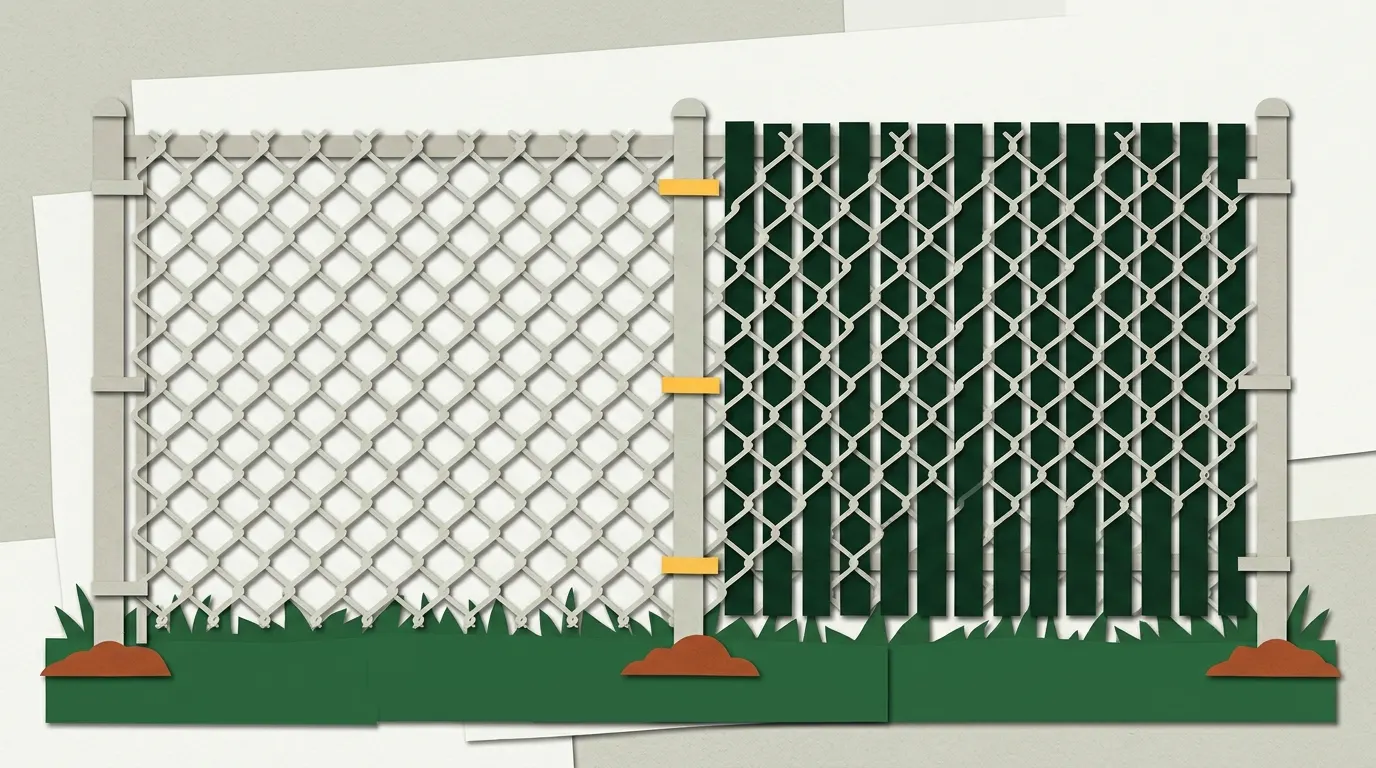
Gates are where chain link stays cheap. A chain link gate costs $100–$400, with $100 as the typical price, below the $240 we have for a wood gate and the $250–$700 range for vinyl. Our sources' typical price came in below their own low figures, so we set the low equal to the typical price. That makes $100 a floor for a simple walk-through gate, not a promise.
| Option | Low | Typical | High | Unit |
|---|---|---|---|---|
| Wood * | — | $240 | — | /each |
| Vinyl | $250 | $480 | $700 | /each |
| Chain link * | $100 | $100 | $400 | /each |
| Metal * | $600 | $800 | $1,000 | /each |
* Limited data: one source, sources that disagree widely, or a single figure.
Wide drive gates, double gates and rolling gates cost more than the walk-through kind, and the posts that hold them need to be heavier. Self-closing hinges and a latch that locks are worth asking about if the fence keeps in children or a pool. Each gate adds its full price to the estimate, so add only the gates you'll use.
What affects the price
Length
The calculator scales the fence line directly with length. Doubling the feet doubles the fence cost, while gates and the permit stay the same. Chain link handles long runs well, because the mesh comes in rolls and stretches across many posts at once. Measure the actual fence line and count corners and ends, which use heavier posts.
Height
Our chain link prices are for 6-ft fences. Going up to 8 feet raises the fence line by 25–35%, a figure we have from only one source. For 4-ft fences we don't have enough data, so the calculator uses 6-ft prices and notes that a shorter fence will likely cost less. Many backyard chain link fences are 4 feet tall, so if that's your plan, expect quotes under the estimate.
Wire, coating and posts
Thicker wire, vinyl coating and heavier posts all push the price toward the $30 end. Our data doesn't price these choices one by one. Coated mesh in black or green blends into a yard better than bare silver. Galvanized mesh is the cheapest option and still common.
Old fence removal
Removing an old fence adds $6.50–$13 per linear foot, typical $9.50, from two sources that disagree. On 150 feet that brings the total to $2,300–$6,950, typical $4,480. Removal is a bigger share of a chain link job than of a vinyl or wood job, because the new fence itself costs less.
Ground and access
Chain link follows slopes better than panel fences, because the mesh bends to the ground. Rock, roots and narrow side yards still add labor to setting posts. The calculator doesn't price site conditions, so plan nearer the high end if your fence line is hard to dig.
Chain link fence cost by state
Labor is about half of a chain link bill, so local wages explain most of the difference between states. For our 150-foot example, the typical price runs from $2,630 in Oklahoma, $2,640 in Arkansas and $2,680 in South Dakota up to $3,510 in California, $3,560 in Illinois and $3,820 in Hawaii.
- Alabama$2,700
- Alaska$3,470
- Arizona$2,930
- Arkansas$2,640
- California$3,510
- Colorado$3,090
- Connecticut$3,100
- Delaware$2,960
- District of Columbia$3,180
- Florida$2,760
- Georgia$2,760
- Hawaii$3,820
- Idaho$2,790
- Illinois$3,560
- Indiana$3,040
- Iowa$2,890
- Kansas$2,880
- Kentucky$2,800
- Louisiana$2,700
- Maine$3,050
- Maryland$3,150
- Massachusetts$3,390
- Michigan$3,020
- Minnesota$3,170
- Mississippi$2,700
- Missouri$3,000
- Montana$2,950
- Nebraska$2,710
- Nevada$3,040
- New Hampshire$3,050
- New Jersey$3,240
- New Mexico$2,970
- New York$3,440
- North Carolina$2,720
- North Dakota$2,920
- Ohio$2,960
- Oklahoma$2,630
- Oregon$3,180
- Pennsylvania$3,010
- Rhode Island$3,020
- South Carolina$2,760
- South Dakota$2,680
- Tennessee$2,760
- Texas$2,740
- Utah$2,800
- Vermont$3,060
- Virginia$2,940
- Washington$3,450
- West Virginia$2,710
- Wisconsin$2,990
- Wyoming$2,890
Ways to lower the cost
- Go with galvanized mesh if looks don't matter on that stretch of fence.
- Drop to 4 feet where the fence only needs to keep a pet in; check our note above on 4-ft pricing.
- Use walk-through gates unless you need to drive through.
- Reuse good posts. If an old chain link fence has straight, solid posts, ask whether new mesh can go on them.
- Combine materials. Chain link along the back and sides, a nicer fence along the street, can keep the total down.
Hiring tips
Get at least three written quotes for the same chain link fence: the same length, height, wire gauge, coating and number of gates. Each quote should list the top rail, the post sizes, the gates, removal, haul-away and the permit, so you can line it up with the breakdown above. A quote far below our low number may use lighter wire or thinner posts than the others, so ask.
Ask how deep the posts will go and whether they're set in concrete. Confirm who arranges the utility locate and who files the permit, and get the start date and warranty in writing. I'd ask to see a sample of the mesh before the job starts. Make sure the company has a license where your state requires one and can show proof of insurance. Bring the ballpark. Ask for the line items.