National ballpark · 500 sq ft of mid-range carpet, installed
This is a planning range, not a quote.
Limited data: mid-range carpet per sq ft (one source). The real range may be wider.
| Cost | Low | Typical | High |
|---|---|---|---|
| Carpet and pad | $1,170 | $2,910 | $4,290 |
| Labor | $330 | $820 | $1,210 |
| Total | $1,500 | $3,740 | $5,500 |
How this carpet installation cost calculator works
Enter your ZIP code, the floor area in square feet, the carpet grade and the pad. Tick the box if old carpet has to come up first, and add the number of stairs. The calculator multiplies your area by an installed price per square foot that already includes carpet, pad and labor. It then scales the carpet part of that price up or down for the grade you picked, adds removal and stairs, and adjusts the total for wages and prices in your state.
You get three numbers. Low is a simple job: square rooms, an open floor and basic carpet. Typical is where most quotes land. High covers heavier carpet, rooms with many corners and seams, and busy seasons. The breakdown splits the bill into carpet and pad on one line and labor on another, so you can hold it next to an installer's quote.
On our 500 sq ft example, carpet and pad come to $1,170–$4,290, typical $2,910, and labor to $330–$1,210, typical $820. Labor is about 22% of the bill in our data. That share is our own estimate from two sources that disagree, one putting labor much higher than the other, so the split is a guide, not a rule. The full method is on How we calculate.
Carpet cost by grade
The grade is mostly about the fiber and how dense and tall the pile is. In our source, budget carpet is polyester-type fiber, mid-range is nylon and premium is wool. Material prices before installation:
| Option | Low | Typical | High | Unit |
|---|---|---|---|---|
| Budget * | $2.00 | $2.50 | $3.00 | /sq ft |
| Mid-range * | $2.00 | $3.50 | $5.00 | /sq ft |
| Premium * | $4.00 | $12 | $20 | /sq ft |
* Limited data: one source, sources that disagree widely, or a single figure.
All three rows come from a single source, so the gaps between grades are rougher than the overall installed price. The calculator keeps labor the same for every grade and changes only the carpet line, which is close to how real quotes work: an installer takes about as long to lay budget carpet as premium.
Budget, mid-range or premium?
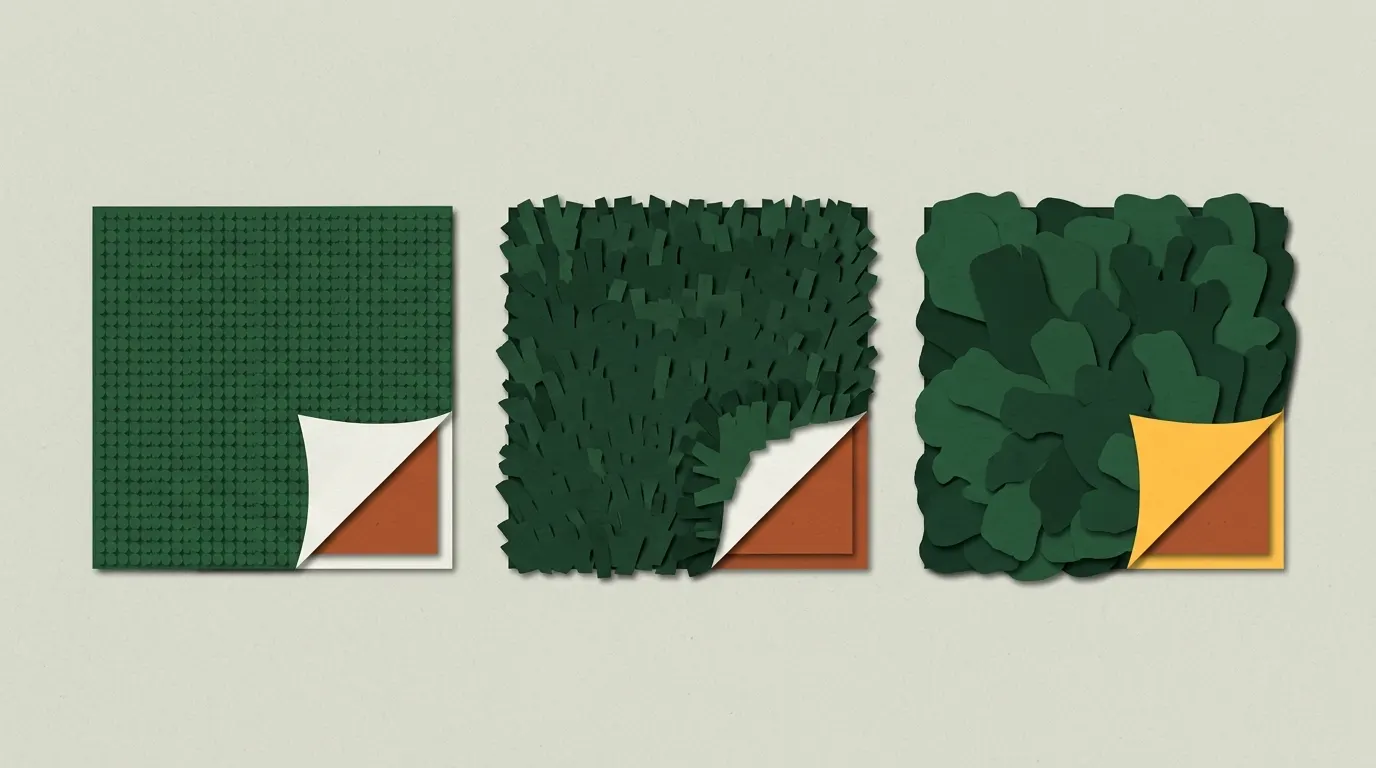
On 500 sq ft, the three grades land far apart:
- Budget: $1,170–$4,270, typical $2,900
- Mid-range: $1,500–$5,500, typical $3,740
- Premium: $4,340–$15,900, typical $10,800
Budget and mid-range overlap a lot. The low ends are close, because the cheapest mid-range carpet costs about what the best budget carpet does. Premium is a different league: the typical price is close to three times the mid-range one. If you're between budget and mid-range, ask to see both grades on the same quote; the difference may be small for your rooms.
I'd put budget carpet in guest rooms and closets and spend more where people walk every day, such as hallways, stairs and the family room. Grade isn't only about softness. Denser pile tends to hold its shape longer in busy spots.
What affects the price
Floor area
The calculator scales in a straight line with area: double the square feet, double the cost. Real carpet comes off rolls of a fixed width, so installers buy extra to cover seams and odd shapes. A narrow hallway or an L-shaped room can waste more carpet than a square room of the same size. Measure each room wall to wall, add closets, and let the installer work out the roll layout.
Carpet grade
Grade is the biggest swing in the bill, as the list above shows. Fiber, pile height and density all count. Our data doesn't split carpet by style, so a berber loop and a plush cut pile of the same grade fall in the same range here.
Pad
Pad sits under the carpet and makes it feel softer and last longer. Five sources put pad at $0.55–$2 per square foot, typical $1, and that cost is already inside the installed price. One source gives single figures for pad types: standard foam around $0.50 and a premium rubber pad around $0.82. Because only one source prices the grades, the calculator doesn't add anything for a premium pad.
Old carpet removal
Tearing out old carpet and pad adds $1.19–$2.49 per square foot, typical $1.84. Our sources disagree widely on this line. Carpet glued to concrete takes longer: one source adds $0.33–$0.56 per square foot for glued-down removal, typical $0.45. The calculator uses the standard removal rate only.
Stairs
Stairs are priced per step at $11–$26, typical $19. Every step is cut and wrapped by hand, so a staircase costs more per square foot than a bedroom. One source also prices removing old carpet from stairs at $7–$20 per step, typical $14; the calculator doesn't add that line.
Small extras
Some quotes list a transition strip at each doorway where carpet meets another floor, priced at $15–$50 each in one source, typical $33. Moving furniture out and back runs $100–$200 for the job, typical $150, also from one source. Neither is in the calculator, so ask whether a quote includes them.
When to budget toward the high end
The typical price assumes empty, square rooms, a flat subfloor and standard carpet. Plan nearer the high number if your rooms have bay windows, angled walls or many closets, if you've picked a patterned carpet that has to line up at the seams, or if the subfloor needs repair before the carpet goes down. Subfloor work isn't in our data, and a squeaky or uneven floor is easiest to fix while the old carpet is up.
Carpet installation cost by state
Labor is only about a fifth of a carpet bill in our data, so states differ less here than for most jobs. For 500 sq ft of mid-range carpet, the typical price runs from $3,290 in Oklahoma, $3,320 in Arkansas and $3,340 in Louisiana to $4,040 in Illinois, $4,370 in Hawaii and $4,450 in Alaska.
- Alabama$3,370
- Alaska$4,450
- Arizona$3,430
- Arkansas$3,320
- California$3,980
- Colorado$3,550
- Connecticut$3,520
- Delaware$3,590
- District of Columbia$3,970
- Florida$3,690
- Georgia$3,550
- Hawaii$4,370
- Idaho$3,620
- Illinois$4,040
- Indiana$3,520
- Iowa$3,530
- Kansas$3,410
- Kentucky$3,530
- Louisiana$3,340
- Maine$3,610
- Maryland$3,680
- Massachusetts$4,030
- Michigan$3,480
- Minnesota$3,790
- Mississippi$3,520
- Missouri$3,600
- Montana$3,350
- Nebraska$3,570
- Nevada$3,660
- New Hampshire$3,740
- New Jersey$3,990
- New Mexico$3,530
- New York$4,020
- North Carolina$3,570
- North Dakota$3,490
- Ohio$3,590
- Oklahoma$3,290
- Oregon$3,890
- Pennsylvania$3,770
- Rhode Island$3,830
- South Carolina$3,530
- South Dakota$3,640
- Tennessee$3,530
- Texas$3,480
- Utah$3,510
- Vermont$3,580
- Virginia$3,660
- Washington$3,870
- West Virginia$3,470
- Wisconsin$3,520
- Wyoming$3,580
Ways to lower the cost
- Match the grade to the room. Use budget carpet where traffic is light and save the better grade for halls and stairs.
- Measure before you shop. Know your square footage, so you can compare quotes on the same area.
- Pull up the old carpet yourself if you're comfortable with a utility knife and pry bar, and ask what the quote is without removal.
- Move the furniture yourself. It's a small line, but it's an easy one to skip.
- Ask about leftover rolls. For a small room, a remnant in the grade you want may cost less than carpet cut from a new roll.
Hiring tips
Get at least three written quotes for the same job: same area, same carpet grade and pad, same stairs. Ask each installer to list carpet, pad, labor, removal, haul-away, transitions and furniture moving as separate lines, then compare them with the breakdown above. A quote far below our low number may leave out the pad or removal.
Ask where the seams will go and how they'll be joined, because a seam across the middle of a room shows more than one in a doorway. Ask whether the carpet will be power-stretched, which keeps it from rippling later, and what the labor warranty covers. Check for a license where your state requires one and ask for proof of insurance. Bring the ballpark. Ask for the line items.