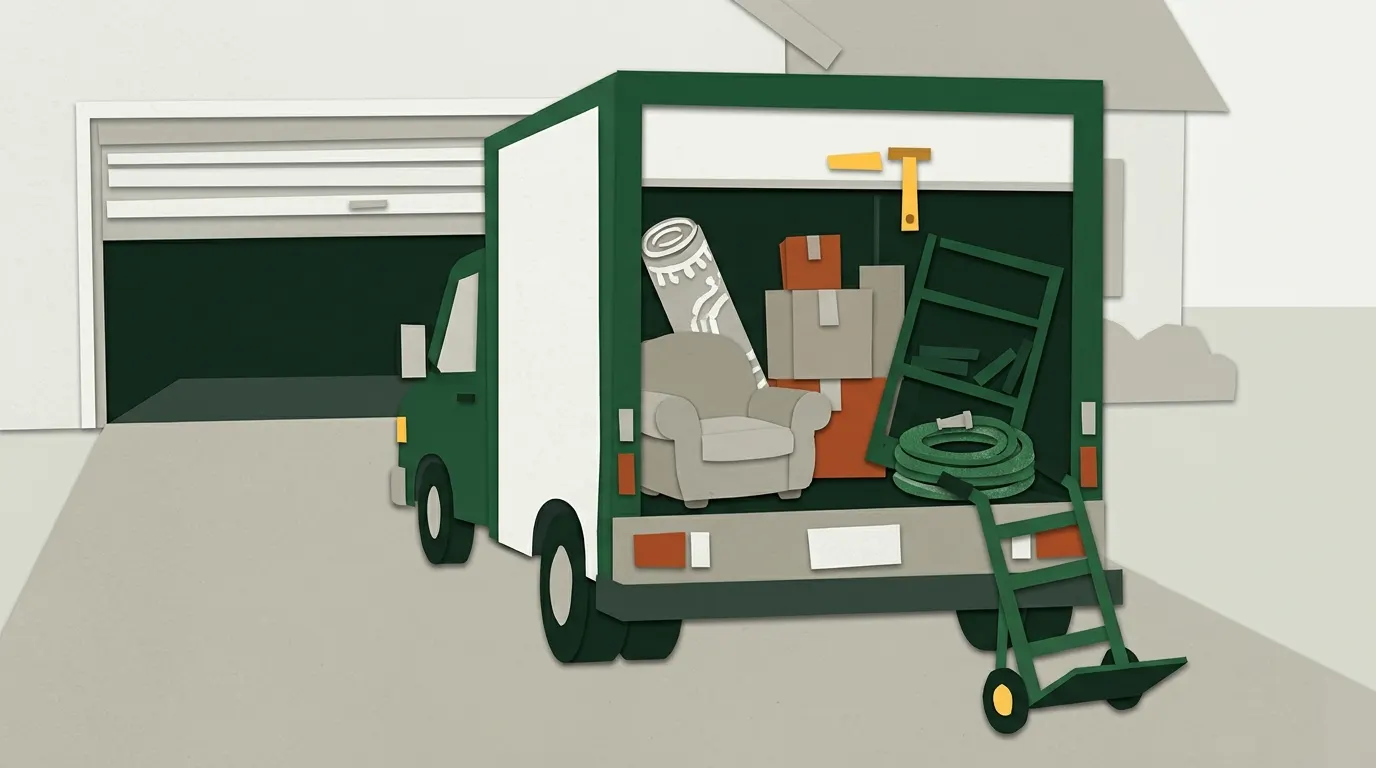
National ballpark · one 1/2 truck load of junk removal
This is a planning range, not a quote.
| Cost | Low | Typical | High |
|---|---|---|---|
| Hauling, labor and disposal | $250 | $380 | $450 |
| Total | $250 | $380 | $450 |
How this junk removal cost calculator works
Enter your ZIP code, pick a load size and say how many loads or items you have. A single item covers one bulky piece, like a couch, a mattress or a fridge. The truck sizes describe how much of a hauler's truck your pile would fill: a quarter, half or the whole bed. The calculator multiplies your count by the national price for that size, then adjusts the result for wages and prices in your state.
You get three numbers. Low is a simple pickup with easy access. Typical is where most quotes land. High covers heavy items, tight access and pricier landfills. The result is one line, because haulers quote one price for the crew, the truck and the dump fee, and none of our sources split it apart.
The state adjustment uses construction wages from the Bureau of Labor Statistics and regional price levels from the Bureau of Economic Analysis. The full method is on our How we calculate page.
Junk removal cost by load size
Haulers price by volume, not by weight or the hour. Most of them look at your pile and estimate what share of the truck it will take. That makes load size the one input that matters most, and it's also where our sources agree best: five or six of them price each size.
| Option | Low | Typical | High | Unit |
|---|---|---|---|---|
| 1/2 truck | $250 | $380 | $450 | /load |
| 1/4 truck | $140 | $160 | $280 | /load |
| Full truck | $600 | $680 | $800 | /load |
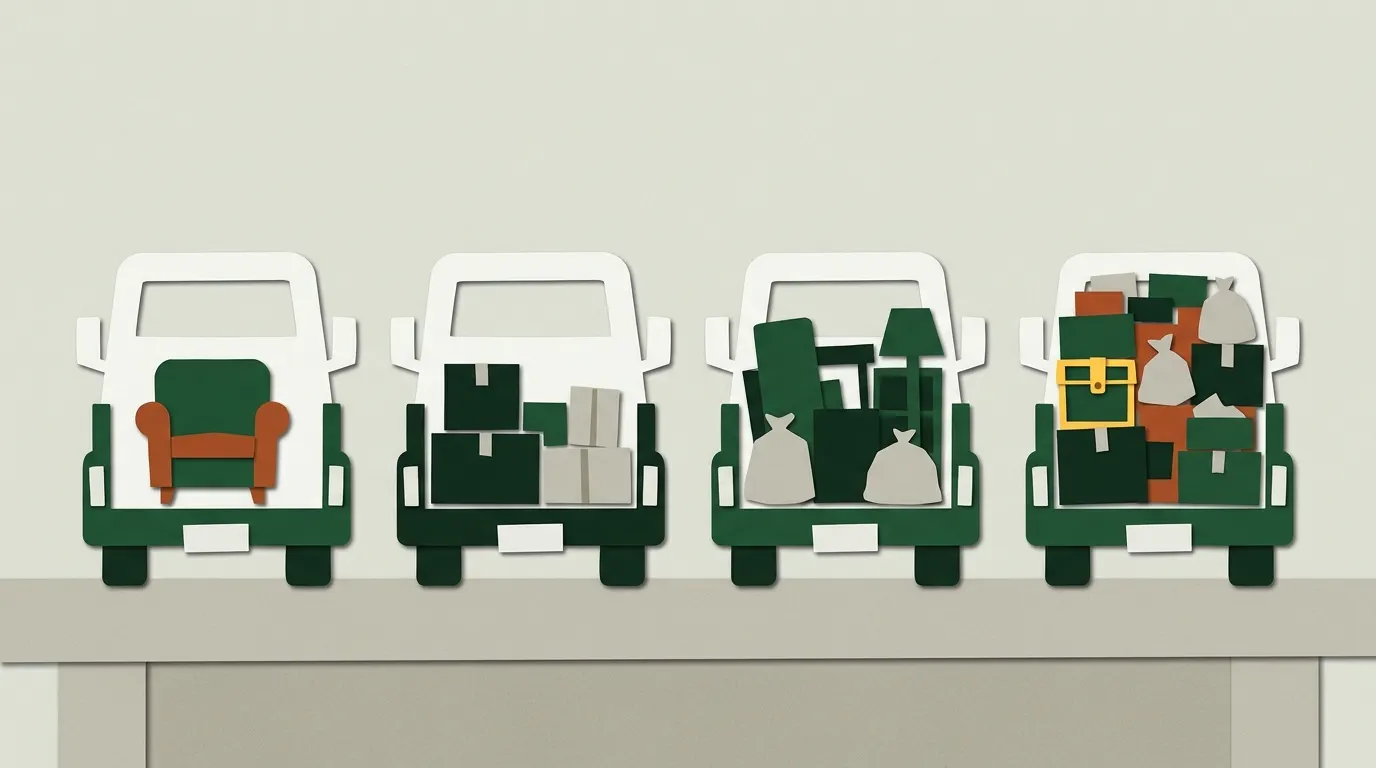
A quarter truckload runs $140–$280, typical $160. That's about what a garage corner or a few pieces of furniture fill. A half truckload costs $250–$450, typical $380, and covers a small room or a modest garage cleanout. A full truck runs $600–$800, typical $680.
Look at the jump from a half to a full load. A full truck holds twice as much but doesn't cost twice as much, so two separate half-load pickups cost more than one full load. If you're cleaning out in stages, one bigger visit usually beats several small ones.
How to guess your load size
The hardest part of using any junk removal calculator is knowing how big your pile is. Here's a simple way to think about it:
- Single item: one couch, one mattress, one appliance. Priced per piece at $75–$180, typical $120.
- Quarter truck: a few pieces of furniture or a corner of the garage.
- Half truck: a small room's worth of stuff, or a pile that fills a single-car garage bay about waist-high.
- Full truck: a whole basement, a large garage or most of a small apartment.
When you're between two sizes, run the calculator for both. I'd plan on the bigger one, since piles tend to grow once you start pulling things out of corners. Then let the hauler measure in person; most quote the final price after seeing the load.
What affects the price
Volume
Volume decides the price class. Our data also shows a minimum load, about an eighth of a truck, at $88–$180, typical $90. Very small jobs land near that floor no matter how little you have.
Minimum charges
Many haulers set a minimum fee for any pickup. One source puts it at $70–$150, typical $110. That's a single figure, so treat it as a rough guide. If you only have one item, ask whether the per-item price or the minimum applies.
Stairs and long carries
A crew that has to carry a sofa down three flights works longer than one loading from the driveway. One source prices extra labor for stairs at $50–$150, typical $100. It's a single source, but the point holds: easy access keeps the bill near the low end.
What's in the pile
Household junk is the cheapest kind to haul. Construction debris, such as drywall, lumber and old tile, is heavier and often costs more at the landfill. One source prices a load of construction debris at $300–$800, typical $550. Our calculator doesn't price debris loads separately, so expect quotes for renovation waste to run higher than the household numbers above.
Light demolition
Some jobs need something taken apart before it can be hauled, like a hot tub or an old playset. We don't have a reliable national price for this, so the calculator says so rather than estimating. Ask for an on-site quote that lists the demolition and the haul-away separately.
Tearing down a whole structure is a different job, and the calculator prices it: set the job to demolition and pick a house, an interior, a garage, a shed, a deck or a pool. The demolition cost calculator opens with that setting.
| Option | Low | Typical | High | Unit |
|---|---|---|---|---|
| Deck | $900 | $1,900 | $2,900 | project |
| Garage | $1,100 | $3,500 | $6,500 | project |
| Interior * | $720 | $2,500 | $4,130 | project |
| Pool | $4,000 | $7,630 | $16,000 | project |
| Shed | $500 | $1,250 | $2,000 | project |
| Whole house | $6,750 | $14,000 | $25,000 | project |
* Limited data: one source, sources that disagree widely, or a single figure.
Labor and disposal
You'll see one line on your estimate, not a split between labor and the dump fee. Every source we checked quotes junk removal as an all-in price per load, and none says how much of it is labor. Ask each hauler what the price includes before you compare.
Hauler or dumpster?
If you have time and a strong back, renting a dumpster is the main alternative. One source puts a dumpster rental at $300–$600, typical $450. That's close to a half truckload with a crew, but you do the lifting. A dumpster makes sense for a slow cleanout or a remodel that produces waste over several weeks. A hauler fits better when you want it gone in one afternoon. Your city may need a permit for a dumpster on the street, so ask before you book one.
Junk removal cost by state
Junk removal prices vary less between states than most home jobs. For one half truckload, the typical price runs from $340 in Louisiana and Arkansas and $350 in Oklahoma to $410 in Washington, the District of Columbia and Hawaii. Local wages explain most of the gap, along with fuel and landfill costs.
- Alabama$350
- Alaska$410
- Arizona$390
- Arkansas$340
- California$410
- Colorado$400
- Connecticut$390
- Delaware$350
- District of Columbia$410
- Florida$360
- Georgia$360
- Hawaii$410
- Idaho$370
- Illinois$380
- Indiana$370
- Iowa$380
- Kansas$360
- Kentucky$380
- Louisiana$340
- Maine$380
- Maryland$390
- Massachusetts$390
- Michigan$360
- Minnesota$400
- Mississippi$350
- Missouri$360
- Montana$380
- Nebraska$380
- Nevada$360
- New Hampshire$380
- New Jersey$380
- New Mexico$350
- New York$410
- North Carolina$360
- North Dakota$390
- Ohio$360
- Oklahoma$350
- Oregon$410
- Pennsylvania$380
- Rhode Island$380
- South Carolina$360
- South Dakota$360
- Tennessee$360
- Texas$360
- Utah$380
- Vermont$370
- Virginia$370
- Washington$410
- West Virginia$350
- Wisconsin$380
- Wyoming$360
Ways to lower the cost
- Sort first. Donate, sell or recycle what you can. A smaller pile drops you a load size.
- Bring it to the curb. Items in the garage or driveway avoid charges for stairs and long carries.
- Book one visit. Two half loads cost more than one full load.
- Group single items. Three bulky pieces may cost less as a quarter load than priced one by one.
- Ask about your city's bulk pickup. Many towns collect large items on set days for little or nothing.
- Keep debris separate. Mixing construction waste into household junk can raise the price of the whole load.
Hiring tips
Get two or three quotes, and describe the same pile to each hauler: what's in it, roughly how much, and where it sits. Photos help. Most haulers give a range by phone and a final price when they see the load, so ask how they measure it and what happens if the pile turns out bigger or smaller.
Ask what the price includes: loading, sweeping up, disposal and any charges for heavy items, stairs or mattresses. Ask where the items go and whether usable pieces are donated. Get the final price in writing before the crew starts loading, and check that the company is insured where your state requires it. A price far below our low number deserves questions about where the junk will end up. Bring the ballpark. Ask for the line items.