National ballpark · finishing an 800 sq ft basement to a mid-range level
This is a planning range, not a quote.
Limited data: mid-range finishing per sq ft (one source). The real range may be wider.
| Cost | Low | Typical | High |
|---|---|---|---|
| Materials | $22,400 | $35,200 | $48,000 |
| Labor | $5,600 | $8,800 | $12,000 |
| Permit (varies by city) national | $500 | $1,250 | $2,000 |
| Total | $28,500 | $45,300 | $62,000 |
How this basement finishing cost calculator works
Enter your ZIP code, the area you want to finish in square feet, and a finish level: basic, mid-range or high-end. Tick the boxes if you're adding a bathroom or an egress window, a window large enough to climb out through. The calculator multiplies your area by a price per square foot for that finish level, adds the bathroom and window if you picked them, then adds the permit.
The result is adjusted for your state. The labor part follows state construction wages from the Bureau of Labor Statistics, and the rest follows regional price levels from the Bureau of Economic Analysis. Permit fees aren't adjusted, because cities set them. The full method is on our How we calculate page.
You get three numbers. Low is a simple job with standard materials and few surprises. Typical is where most quotes land. High covers premium finishes, more complex layouts and busy markets. The breakdown shows materials, labor and the permit as separate lines, so you can hold it next to a contractor's quote.
Basement finishing cost by finish level
Finish level sets the price per square foot. In general, a basic finish means walls, ceiling, flooring, lighting and outlets in plain materials. Mid-range adds better flooring, more lighting and nicer trim. High-end adds built-ins, custom features and more costly materials throughout.
| Option | Low | Typical | High | Unit |
|---|---|---|---|---|
| Basic * | $20 | $28 | $35 | /sq ft |
| High-end * | $75 | $93 | $110 | /sq ft |
| Mid-range * | $35 | $55 | $75 | /sq ft |
* Limited data: one source, sources that disagree widely, or a single figure.
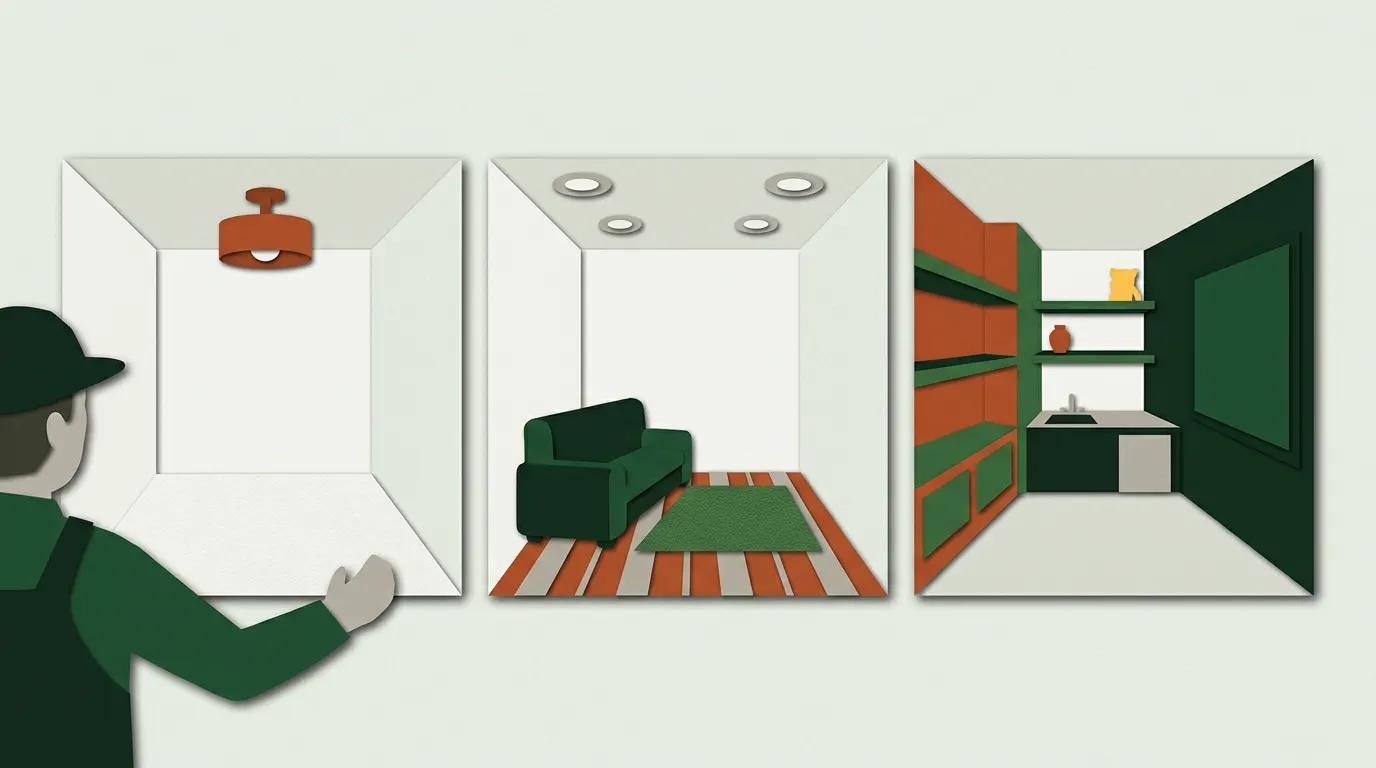
All three finish-level rates come from one publisher, Block Renovation, and its two pages on the topic don't give exactly the same tiers. That's thin data for the biggest number on this page, so the calculator marks it as limited and we'd treat it the same way. On our 800 sq ft example, basic comes to $16,500–$30,000 (typical $23,300), mid-range to $28,500–$62,000 (typical $45,300) and high-end to $60,500–$90,000 (typical $75,300).
What affects the price
Finish level
This is the biggest choice you make. Going from basic to mid-range roughly doubles the typical price on our example, and high-end adds a good deal more on top. Many people mix levels, with a mid-range family room and a basic storage or laundry area, which lands the total somewhere between.
Area
Every square foot you finish adds the per-foot rate, so the area you include matters. You don't have to finish all of it. Leaving the furnace and water heater area, a workshop or a storage room unfinished keeps those square feet out of the bill.
Bathroom
A basement bathroom adds $11,000–$25,000, typical $18,000, based on three sources. On our example, that moves the total to $39,500–$87,000 (typical $63,300). Ask contractors where the existing drain lines are and whether the toilet can drain by gravity or needs a pump, because that changes the plumbing work.
Egress window
An egress window runs $2,500–$5,400, typical $3,900, based on five sources. The job usually means cutting a larger opening in the foundation wall and adding a window well outside. Adding one moves our example to $31,000–$67,400 (typical $49,200). If the basement will have a bedroom, ask your building department what's required.
Labor
Our sources disagree on how much of a basement job is labor, from a fifth of the bill to more than half. The calculator uses 20%, so the state adjustment moves this job less than it moves labor-heavy work such as tree removal. If your contractor bills labor separately, compare that line with ours and expect it to differ.
Permit
Permits run $500–$2,000, typical $1,250, based on three sources. Ask your city whether framing, electrical and plumbing work each need their own inspection. Ask who pulls the permit and whether the fee is in the quote.
Basement finishing cost by state
Because labor is a smaller share here than on most jobs, the gap between states is narrower. For our 800 sq ft mid-range example, the typical price runs from $41,000 in Arkansas, $41,100 in Oklahoma and $41,400 in Louisiana up to $49,200 in New Jersey, $49,500 in Alaska and $54,500 in Hawaii.
- Alabama$42,300
- Alaska$49,500
- Arizona$42,800
- Arkansas$41,000
- California$49,000
- Colorado$45,200
- Connecticut$44,700
- Delaware$43,100
- District of Columbia$47,900
- Florida$43,000
- Georgia$44,000
- Hawaii$54,500
- Idaho$42,200
- Illinois$48,300
- Indiana$43,200
- Iowa$42,200
- Kansas$41,500
- Kentucky$42,500
- Louisiana$41,400
- Maine$44,500
- Maryland$46,000
- Massachusetts$46,700
- Michigan$43,900
- Minnesota$45,900
- Mississippi$41,400
- Missouri$44,200
- Montana$43,800
- Nebraska$41,700
- Nevada$43,600
- New Hampshire$45,000
- New Jersey$49,200
- New Mexico$43,500
- New York$48,800
- North Carolina$42,200
- North Dakota$42,500
- Ohio$43,200
- Oklahoma$41,100
- Oregon$48,400
- Pennsylvania$45,100
- Rhode Island$43,400
- South Carolina$42,200
- South Dakota$42,000
- Tennessee$42,400
- Texas$42,900
- Utah$42,800
- Vermont$44,500
- Virginia$44,800
- Washington$48,800
- West Virginia$42,800
- Wisconsin$43,400
- Wyoming$42,200
What other sources say
Basement prices vary across sources more than most jobs, because each defines "finishing" differently. Two sources put basic finishing at $7–$23 per square foot, typical $15. Two others price a full basement remodel at $30–$83 per square foot, typical $56. Single-source project totals include $15,000–$30,000 for 900 sq ft and $30,000–$70,000 for 1,500–2,000 sq ft. One source gives a national range of $2,800–$100,000, which shows how far apart these projects can be.
Our calculator's mid-range rate sits above the basic finishing figures and close to the remodel ones. If your quote comes in near the lower figures, check which of these jobs it describes.
Before you finish: keep it dry
Finishing a basement that takes on water puts new drywall, carpet and framing at risk. If you've seen damp walls, puddles after rain or a musty smell, deal with the water first. The basement waterproofing cost calculator prices interior drains, sump pumps and crack repair, and the mold remediation cost calculator covers cleanup if moisture has already caused mold.
When to budget toward the high end
The typical price assumes a dry, open basement with reasonable ceiling height, a simple layout and standard materials. Plan nearer the high number if you want several rooms instead of one open space, if ductwork, pipes or a low ceiling need working around, if the bathroom sits far from the existing drain lines, or if you're choosing custom built-ins and premium flooring. Older basements can also hide surprises once the walls go up, so ask each contractor what they'd check before framing starts.
Ways to lower the cost
- Finish in stages. Do the main living area now and the guest room or bathroom later.
- Leave utility areas unfinished. The furnace, water heater and storage space don't need drywall and carpet.
- Mix finish levels. Spend on the room you'll use most and keep the rest basic.
- Plan the bathroom near existing drains. Short plumbing runs cost less to install.
- Keep the layout simple. Fewer walls and corners mean less framing, drywall and trim.
- Pick standard sizes. Stock doors, trim and flooring cost less than custom pieces.
Hiring tips
Get at least three written quotes for the same plan: same area, same finish level, same bathroom and window choices. Ask each contractor to list framing, insulation, drywall, electrical, plumbing, flooring, trim, paint, the bathroom, the egress window and the permit as separate lines, then compare them with the breakdown above. A quote far below our low number deserves questions about what's left out.
Ask who pulls the permit and schedules inspections, and whether the price includes moisture checks before framing. Get the schedule, payment plan and warranty in writing, and ask how changes will be priced once work starts. Check that the company has a license where your state requires one, and ask for proof of insurance. Bring the ballpark. Ask for the line items.