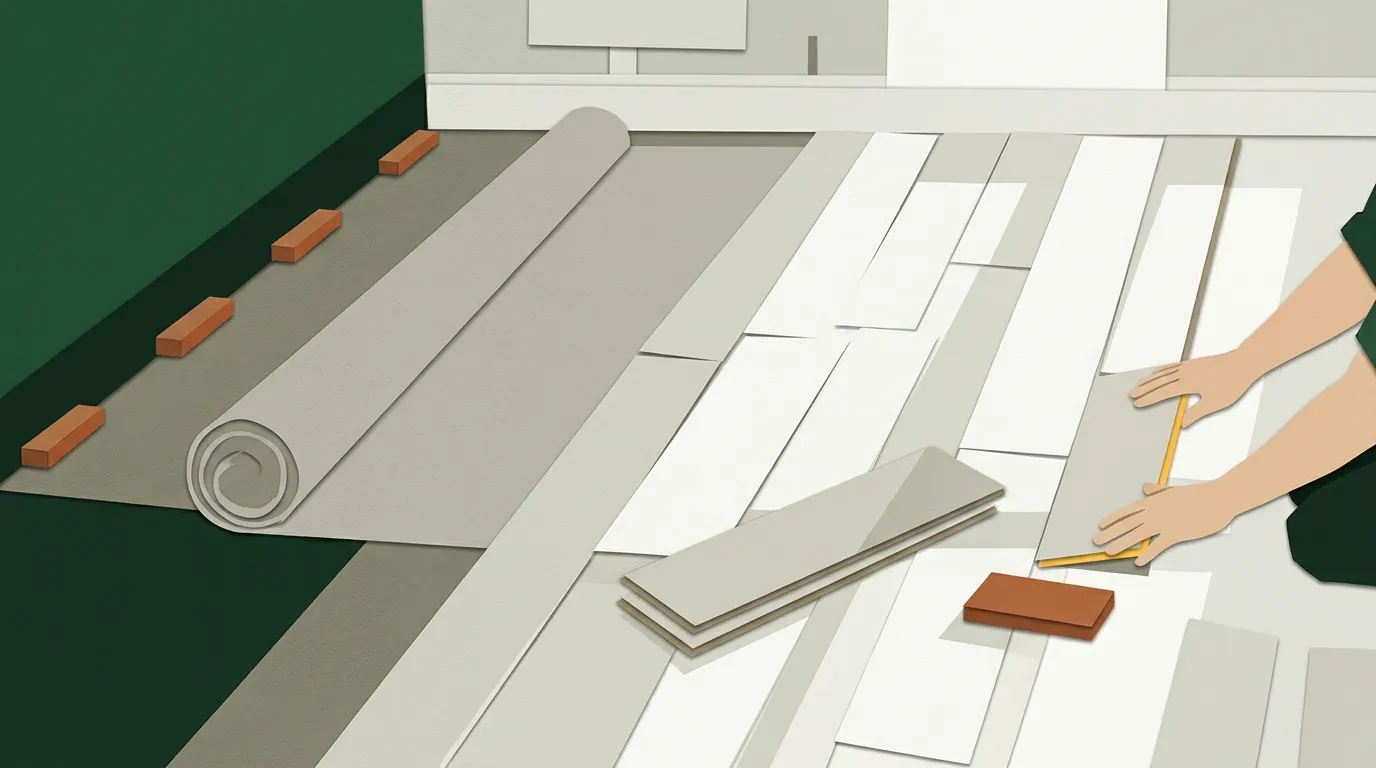
This page prices laminate only. To compare laminate with vinyl plank, hardwood and epoxy, use the main flooring cost calculator. Laminate is a floating floor: planks with a fiberboard core and a photo-printed wood look click together and rest on a thin pad instead of being nailed or glued down.
National ballpark · 500 sq ft of laminate flooring, installed
This is a planning range, not a quote.
| Cost | Low | Typical | High |
|---|---|---|---|
| Flooring materials | $1,300 | $2,210 | $3,120 |
| Labor | $1,200 | $2,040 | $2,880 |
| Total | $2,500 | $4,250 | $6,000 |
How the laminate flooring cost calculator works
Here the flooring is set to laminate. Enter your ZIP code and the square footage, then tick removal if an old floor comes out first and subfloor repair if the base under it needs work. The calculator multiplies your area by the installed laminate rate, adds the two extras when ticked, and shifts the result for labor and material costs in your state.
The 500 sq ft example splits into materials at $1,300–$3,120 (typical $2,210) and labor at $1,200–$2,880 (typical $2,040). That near-even split is an average we worked out from two sources, and the state adjustment moves each half separately. Details are on How we calculate.
Laminate flooring cost per square foot
Installed, laminate costs $5–$12 per square foot, typical $8.50. Seven sources price it, so the middle of the range is well supported; the ends are where floor condition, plank quality and local wages come in.
| Option | Low | Typical | High | Unit |
|---|---|---|---|---|
| Engineered hardwood | $6.00 | $12 | $17 | /sq ft |
| Epoxy | $3.00 | $7.50 | $12 | /sq ft |
| Laminate | $5.00 | $8.50 | $12 | /sq ft |
| Luxury vinyl plank | $4.00 | $7.75 | $12 | /sq ft |
| Solid hardwood | $9.00 | $17 | $25 | /sq ft |
Planks and labor separately
The planks alone run $1–$5 per square foot, typical $2.50. Labor runs $3–$7.50, typical $5.25. So on a typical job, you pay about twice as much for the install as for the planks. That's worth knowing when you shop: moving from a $2.50 plank to a $5 plank changes your bill less than you might think, because labor stays about the same.
| Option | Low | Typical | High | Unit |
|---|---|---|---|---|
| Engineered hardwood | $3.50 | $6.00 | $8.49 | /sq ft |
| Epoxy | $1.25 | $2.63 | $4.00 | /sq ft |
| Laminate | $1.00 | $2.50 | $5.00 | /sq ft |
| Luxury vinyl plank | $2.45 | $6.23 | $10 | /sq ft |
| Solid hardwood | $6.48 | $9.99 | $14 | /sq ft |
What you pay for in a laminate plank
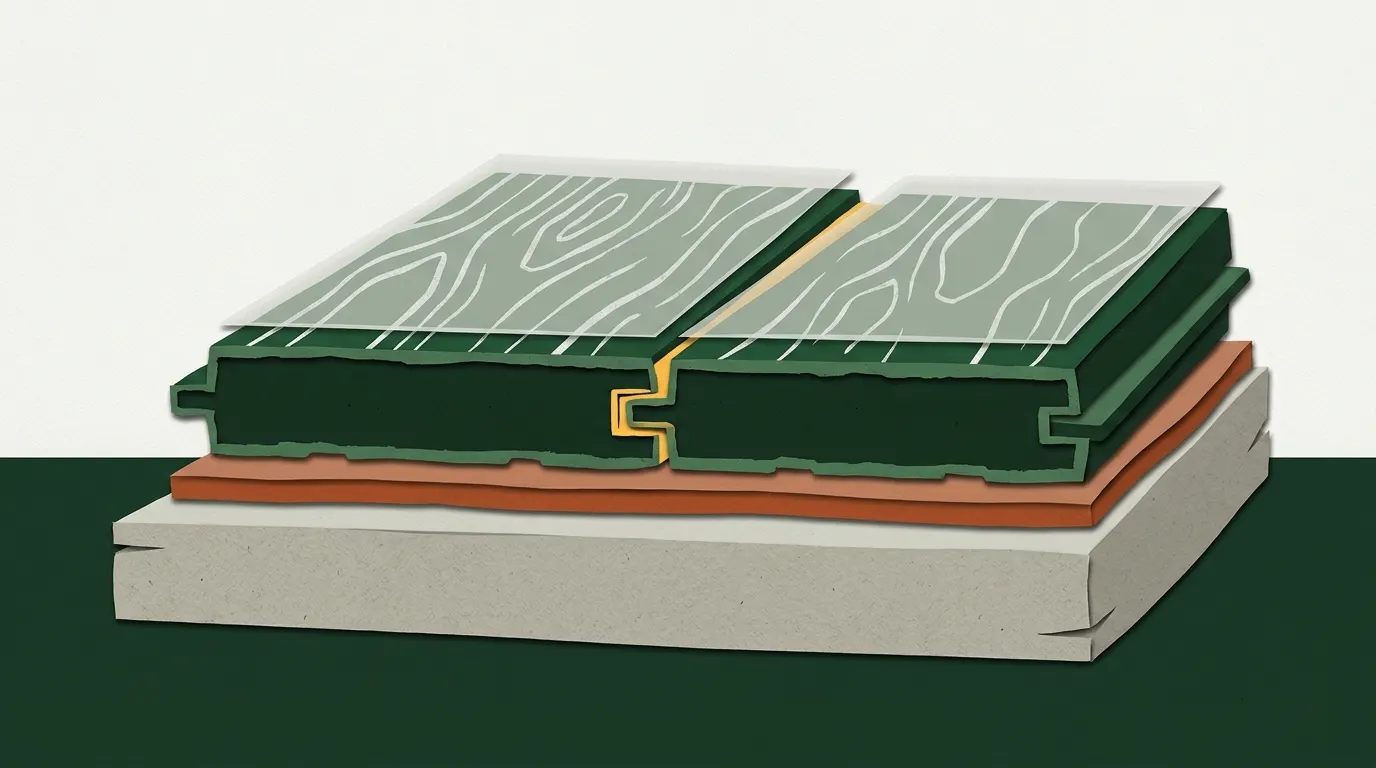
Planks differ in three main ways: thickness, the wear layer on top and whether a pad is attached. Thicker planks feel more solid underfoot and hide small dips in the subfloor better. The wear layer is a clear coat that protects the printed surface from scratches; a tougher one suits halls, kitchens and homes with pets. Some planks come with underlayment already bonded to the back, which saves buying and laying a separate roll. Our data doesn't price these features one by one, so they all sit inside the $1–$5 material range.
Standard laminate doesn't like standing water, because the fiberboard core can swell. Some lines are sold as water-resistant. For a bathroom or a basement that has flooded before, I'd price vinyl plank as well before deciding.
Laminate compared with other floors
On 500 sq ft, here's how laminate's typical price compares with the other options in the main calculator:
- Luxury vinyl plank: typical $3,880
- Laminate: typical $4,250
- Engineered hardwood: typical $5,750
- Solid hardwood: typical $8,500
Laminate sits close to vinyl plank and well below either kind of hardwood. Against solid hardwood, the typical saving on this example is about half the bill. If you want real wood and the price gap is too wide, engineered hardwood is the middle step. For tile instead, see the tile installation cost calculator; for carpet, the carpet installation cost calculator.
What affects the price
Square footage
The installed rate is per square foot, so twice the area means twice the cost. Measure every room the floor will cover, including closets, and add them up. Installers also order more planks than the exact area to cover cuts and waste; ask how much extra each quote includes.
Tear-out
Tick removal and the 500 sq ft total becomes $3,000–$8,000, typical $4,750. The calculator uses one general removal rate of $1–$4 per square foot, typical $1, and our sources disagree on it. One source prices taking up old laminate at $2 per square foot. Laminate itself is quick to pull, since it isn't glued; old tile or glued vinyl is slower.
The subfloor
Laminate needs a flat, dry base. Dips and humps make the click joints flex and gap over time, so installers level them before the planks go in. The calculator's subfloor repair adds $1,000–$3,500, typical $2,250, a single-source figure. Other sources price repair by area at $1.50–$6 per square foot, which can run higher on a large floor.
Rooms, stairs and trim
Laminate is cut around every door frame, vent and cabinet, and each doorway into a different floor needs a transition strip. Baseboards or quarter-round trim cover the small gap left at the walls for expansion. Stairs need special nosing pieces and take far longer per square foot. None of this is priced separately in our data.
When to budget toward the high end
The typical price assumes open rooms, a subfloor in decent shape and a mid-range plank. I'd plan nearer the high number if the old floor is tile or glued sheet vinyl, if the house is older and the floors aren't level, or if the job winds through many small rooms and doorways. A thick, premium plank with a strong wear layer also pushes the material line up. On the other hand, a single open room over a flat concrete slab or sound plywood is the kind of job that lands near the low end. If you can't tell what's under the current floor, lift a corner of carpet in a closet or ask the installer to check before quoting.
Laminate flooring cost by state
Since labor runs close to half of a laminate job, state wages account for most of the price gap. On 500 sq ft, the typical cost is lowest in Oklahoma ($3,450), Montana ($3,480) and Alabama ($3,530). It's highest in Massachusetts ($5,050), Hawaii ($5,260) and Alaska ($5,700).
- Alabama$3,530
- Alaska$5,700
- Arizona$3,720
- Arkansas$3,540
- California$4,560
- Colorado$3,840
- Connecticut$3,860
- Delaware$4,100
- District of Columbia$4,520
- Florida$4,230
- Georgia$3,850
- Hawaii$5,260
- Idaho$4,160
- Illinois$4,820
- Indiana$3,940
- Iowa$4,060
- Kansas$3,740
- Kentucky$3,940
- Louisiana$3,600
- Maine$4,080
- Maryland$4,000
- Massachusetts$5,050
- Michigan$3,810
- Minnesota$4,370
- Mississippi$3,910
- Missouri$4,110
- Montana$3,480
- Nebraska$4,130
- Nevada$4,240
- New Hampshire$4,340
- New Jersey$4,530
- New Mexico$3,920
- New York$4,590
- North Carolina$4,000
- North Dakota$3,850
- Ohio$4,220
- Oklahoma$3,450
- Oregon$4,370
- Pennsylvania$4,360
- Rhode Island$4,620
- South Carolina$3,930
- South Dakota$4,240
- Tennessee$3,930
- Texas$3,720
- Utah$3,860
- Vermont$4,000
- Virginia$4,040
- Washington$4,360
- West Virginia$3,770
- Wisconsin$3,990
- Wyoming$4,100
Ways to lower the cost
- Pick a mid-priced plank. Labor stays the same, so premium planks rarely pay off in a bedroom or office.
- Choose planks with attached pad if your installer approves them, and skip a separate underlayment line.
- Clear the rooms yourself. Moving furniture and pulling carpet before the crew arrives can trim the labor line.
- Keep the layout straight. Planks running in one direction through connected rooms need fewer cuts and transitions.
- Do several rooms at once so the setup cost is spread over more square feet.
Hiring tips
Get three written quotes for the same rooms and the same plank, or ask each installer to price the plank you've picked. Each quote should list planks, underlayment, labor, removal, subfloor work, transitions and trim on separate lines. Compare those with the breakdown above.
Ask how long the planks will sit in your home before installation; many makers want them to adjust to the room first. Ask how the installer checks the subfloor for flatness and what extra they charge per hour or per sheet if repairs turn up. Confirm whether baseboards are removed and reinstalled or covered with new trim. Check for a license where your state requires one and for proof of insurance. Bring the ballpark. Ask for the line items.