This page prices one job: putting a new finish on an inground pool you already own. For a new pool, use the main pool cost calculator or our inground pool cost calculator. Resurfacing means draining the pool, removing or roughening the worn surface and applying a new one.
National ballpark · resurfacing an inground pool with plaster
This is a planning range, not a quote.
Resurfacing prices are for a typical backyard pool; pool size and any tile or coping repairs move it within the range.
| Cost | Low | Typical | High |
|---|---|---|---|
| Materials | $1,460 | $2,980 | $4,510 |
| Labor | $1,290 | $2,640 | $4,000 |
| Total | $2,750 | $5,630 | $8,500 |
How the pool resurfacing cost calculator works
The job is set to resurfacing and the finish starts on plaster. Enter your ZIP code and pick a finish: plaster, quartz aggregate, pebble, tile, fiberglass gelcoat or paint. The calculator takes the national price for resurfacing a whole pool with that finish and adjusts it for wages and prices in your state.
For plaster, the national breakdown is:
- Materials: $1,460–$4,510, typical $2,980
- Labor: $1,290–$4,000, typical $2,640
There's no permit line here, because our data has no permit fee for resurfacing. We split the bill with labor at 47%, the same share we use for pools in general. Wages from the Bureau of Labor Statistics move the labor part and regional price levels from the Bureau of Economic Analysis move the materials part. See How we calculate for the full method.
The pool type, size and extras fields on the form don't change a resurfacing estimate. Our sources price this work per whole pool by finish, so the size of your pool moves you within the range rather than changing it.
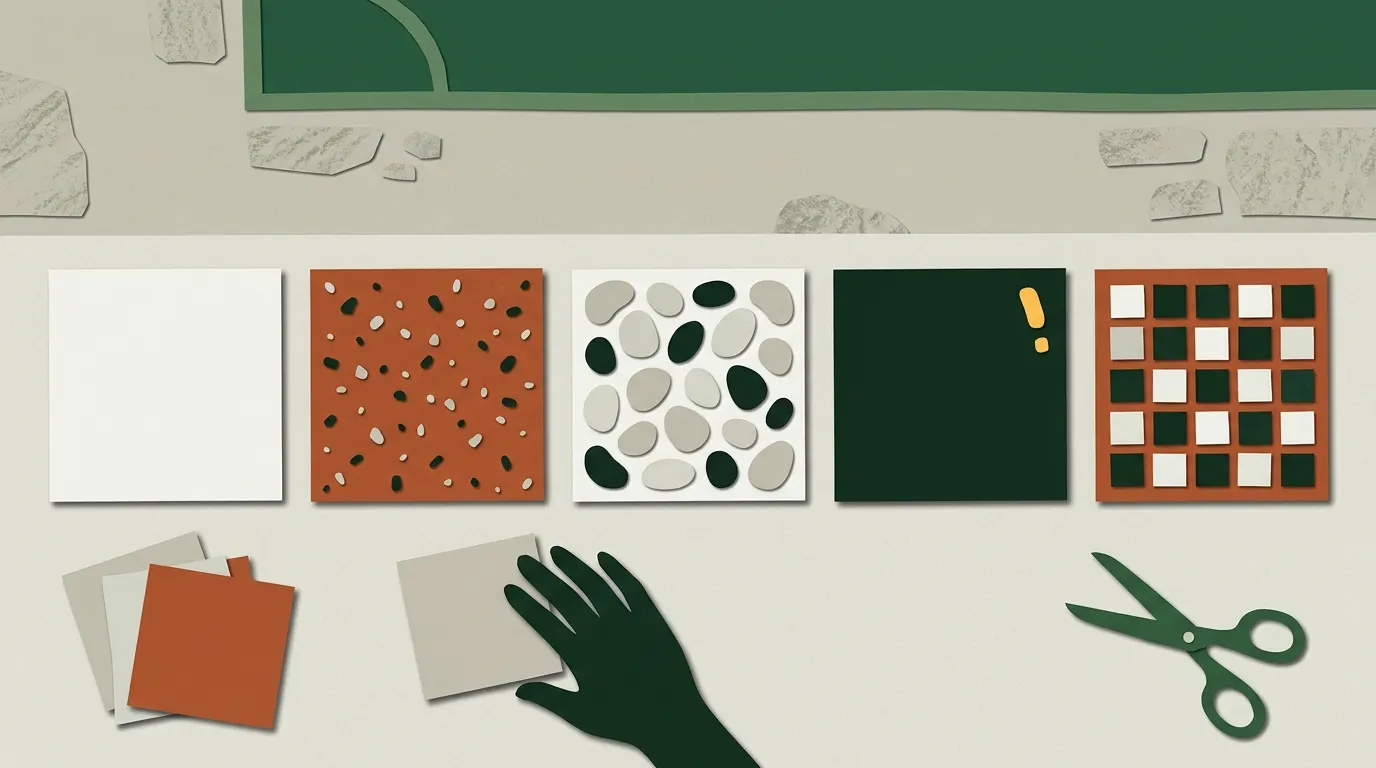
Pool resurfacing cost by finish
Finish is the whole story on this page. The cheapest and the priciest options differ by nearly ten times on a typical job.
| Option | Low | Typical | High | Unit |
|---|---|---|---|---|
| Fiberglass gelcoat | $6,000 | $10,500 | $15,000 | project |
| Overall | $6,000 | $8,750 | $17,500 | project |
| Paint | $2,250 | $3,750 | $5,250 | project |
| Pebble | $6,250 | $10,300 | $14,300 | project |
| Plaster | $2,750 | $5,630 | $8,500 | project |
| Quartz aggregate | $5,250 | $8,500 | $11,800 | project |
| Tile * | $20,000 | $35,000 | $50,000 | project |
* Limited data: one source, sources that disagree widely, or a single figure.
Plaster
Plaster, often called marcite or white plaster, is a smooth cement-based coat. It's the baseline: $2,750–$8,500 for a whole pool, typical $5,630, from three sources. Per square foot of surface, our data shows $4.50–$7.90, typical $4.50. The typical sits at the low end because one source's figure fell below the others, so we set the low to match it.
Quartz aggregate
Quartz aggregate mixes colored quartz grains into the plaster for a speckled look and a harder surface. Two sources price it at $5,250–$11,800, typical $8,500. One source gives $6–$11 per square foot, typical $8.50.
Pebble
A pebble finish sets small rounded stones in the coat, leaving a textured surface you can feel underfoot. Two sources put it at $6,250–$14,300, typical $10,300, or $10–$18 per square foot, typical $10.
Fiberglass gelcoat
Gelcoat is the glossy outer layer of a fiberglass shell. When it fades or blisters, it can be sanded and resprayed. Three sources price that at $6,000–$15,000, typical $10,500. A single source gives $7–$15 per square foot, typical $11. Gelcoat applies to fiberglass pools; plaster, quartz and pebble go on concrete.
Paint
Pool paint is the least expensive way to refresh a surface: $2,250–$5,250, typical $3,750, from two sources. One source gives $1–$2 per square foot, typical $1.50. It's a coating rather than a new plaster layer, so ask the installer how often it would need repainting.
Tile
A fully tiled pool is the top of the range at $20,000–$50,000, typical $35,000. That comes from a single source, so the real range may be wider. Per square foot, three sources give $25–$35, typical $30, and they disagree widely. Most pools use tile only along the waterline, and our data doesn't price that band alone.
What affects the price
Pool size
Our resurfacing prices assume a typical backyard pool. One source gives a rough rule of about $5,500 per 1,000 sq ft of surface for plaster, $6,500 for quartz and $1,500 for paint, all single figures. For a closer number, measure the floor and walls and multiply by the per square foot rate for your finish.
Condition of the old surface
A finish over sound plaster takes less work than one over cracks, hollow spots or peeling paint. Repairs to tile and coping, the stone or concrete cap along the pool edge, move the price within the range. Our data doesn't price those repairs separately.
Draining and refilling
Every resurfacing job starts with an empty pool. One source prices draining at $180–$230, typical $200, a single figure. Refilling and rebalancing the water add their own cost, which the calculator doesn't include.
Labor
Three sources put resurfacing labor at $45–$65 an hour, typical $55. Most crews quote the whole job, though, so use the hourly rate only to judge how many crew-days a quote assumes.
Vinyl pools
Vinyl pools aren't resurfaced. They get a new liner instead, and our data doesn't price liner replacement yet.
Signs it may be time to resurface
A worn finish usually tells you. Rough patches that snag swimsuits or scrape feet, stains that don't scrub out, flaking paint, chalky water and small cracks in the surface are the common signs. Hollow-sounding spots, where the plaster has pulled away from the shell, are another. Most of them get harder to fix the longer they spread.
Before you price a full resurfacing, ask a contractor whether a patch would do for now. A small repair costs less than a whole new finish, though our data doesn't price patch work. If the surface is failing across most of the pool, a full job is usually the better use of the money, since the pool has to be drained either way.
Pool resurfacing cost by state
Close to half of a resurfacing bill is labor, so wages explain most of the difference between states. For a plaster job, the typical price runs from $4,920 in Arkansas, $4,940 in Mississippi and $4,950 in Alabama to $6,610 in Illinois, $6,950 in Alaska and $7,710 in Hawaii.
- Alabama$4,950
- Alaska$6,950
- Arizona$5,520
- Arkansas$4,920
- California$6,310
- Colorado$5,690
- Connecticut$5,900
- Delaware$5,470
- District of Columbia$6,010
- Florida$5,290
- Georgia$5,110
- Hawaii$7,710
- Idaho$5,500
- Illinois$6,610
- Indiana$5,670
- Iowa$5,500
- Kansas$5,270
- Kentucky$5,310
- Louisiana$5,010
- Maine$5,490
- Maryland$5,580
- Massachusetts$6,200
- Michigan$5,640
- Minnesota$6,240
- Mississippi$4,940
- Missouri$5,890
- Montana$5,690
- Nebraska$5,280
- Nevada$5,660
- New Hampshire$5,600
- New Jersey$6,410
- New Mexico$5,090
- New York$6,250
- North Carolina$5,220
- North Dakota$5,570
- Ohio$5,830
- Oklahoma$4,960
- Oregon$6,150
- Pennsylvania$5,780
- Rhode Island$5,960
- South Carolina$5,220
- South Dakota$5,220
- Tennessee$5,240
- Texas$5,160
- Utah$5,490
- Vermont$5,680
- Virginia$5,390
- Washington$6,530
- West Virginia$5,280
- Wisconsin$5,870
- Wyoming$5,490
Ways to lower the cost
- Match the finish to your plans. If you may sell in a few years, plaster or paint keeps the cost down.
- Fix small problems early. Patching a crack before it spreads can push a full resurfacing back.
- Bundle tile and coping repairs into the same visit, so the pool is drained once.
- Ask about the off-season. If your date is flexible, ask whether a quieter month changes the quote.
- Get the same scope from each crew. A cheap quote that skips surface prep is not a cheaper job.
Hiring tips
Ask at least three pool contractors to quote the same finish, the same pool and the same repairs. Each quote should list draining, surface prep, the new finish, tile and coping work, startup chemicals and refilling as separate lines. Compare them with the breakdown above.
I'd ask how the old surface will be prepared, whether it will be chipped out or roughened, and how long the new finish needs before the pool is refilled. Get the warranty on the finish in writing, including what it excludes. Ask who handles the water chemistry for the first weeks. Check that the contractor has a license where your state requires one and carries insurance. Bring the ballpark. Ask for the line items.