National ballpark · one radon mitigation system for a home with a basement
This is a planning range, not a quote.
Our sources give the same price range for basement and slab homes.
| Cost | Low | Typical | High |
|---|---|---|---|
| Materials | $230 | $360 | $680 |
| Labor | $620 | $990 | $1,830 |
| Total | $850 | $1,350 | $2,500 |
| For reference (not added to the total) | |||
| Professional radon test — per each | $130 | $360 | $600 |
How this radon mitigation cost calculator works
Enter your ZIP code, the number of systems and your foundation type: basement, slab or crawl space. Most homes need one system. A large house or one with separate foundation sections, such as a basement plus a slab addition, may need more than one.
The calculator takes an installed price for one radon reduction system, $850–$2,500 with $1,350 typical, and multiplies it by the number of systems. It then adjusts the result for construction wages and price levels in your state. Two sources give that range: a radon program run by Kansas State University under a cooperative agreement with the EPA, and University of Georgia Extension.
Foundation type doesn't change the number. Our sources price basements and slabs the same, and none gives a separate price for crawl spaces. If you pick crawl space, the calculator shows a membrane price below the result as a reference instead of adding it, because whether you need one depends on the crawl space.
You also see the price of a professional radon test below the result, for reference. The breakdown splits the bill into materials and labor so you can compare it with a contractor's quote. The method is on our How we calculate page.
What radon mitigation is
Radon is a radioactive gas that comes from soil and rock. You can't see or smell it, and a test is the only way to know the level in your home. Mitigation means installing a system that lowers how much of it gets indoors.
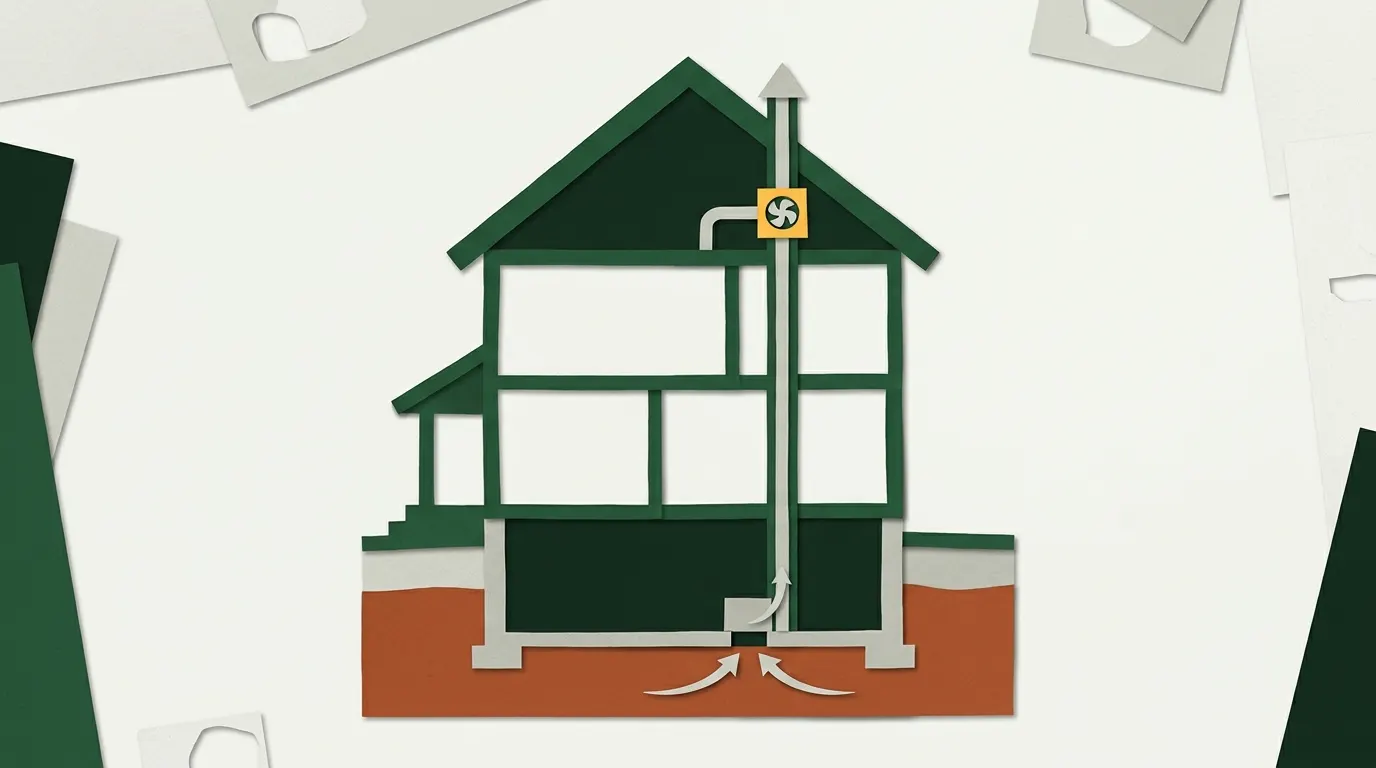
Most systems work the same way. A contractor drills a small hole through the lowest floor, places a pipe into the soil or gravel underneath, and connects a fan that runs all the time. The fan pulls soil gas into the pipe before it can seep inside and vents it outdoors, usually above the roof. Cracks and openings in the floor are sealed to help the system work.
For health questions about radon levels, your state radon program or your doctor is the right place to ask. This page covers cost.
Radon mitigation cost by system type
Different sources name and price systems in different ways. The table shows each as published.
| Option | Low | Typical | High | Unit |
|---|---|---|---|---|
| Active sub-slab depressurization * | $1,200 | $1,850 | $2,500 | project |
| Active suction system * | $500 | $1,500 | $2,500 | project |
| Fan-assisted ventilation * | $800 | $1,650 | $2,500 | project |
| Lower-level pressurization * | $500 | $750 | $1,000 | project |
| Radon reduction system | $850 | $1,350 | $2,500 | project |
| Suction system * | $550 | $1,530 | $2,500 | project |
* Limited data: one source, sources that disagree widely, or a single figure.
Most rows come from a single source, so read them as rough guides rather than firm prices. The top of the range is the same in nearly every row: $2,500. The low end varies more, which mostly reflects how simple a job each source had in mind.
Active sub-slab depressurization, the fan-and-pipe system described above, runs $1,200–$2,500, typical $1,850, in one source. Fan-assisted ventilation runs $800–$2,500 and active suction systems $500–$2,500. Lower-level pressurization, which pushes air into the lowest level instead of pulling from under the floor, is the cheapest at $500–$1,000, but it suits fewer homes.
What affects the price
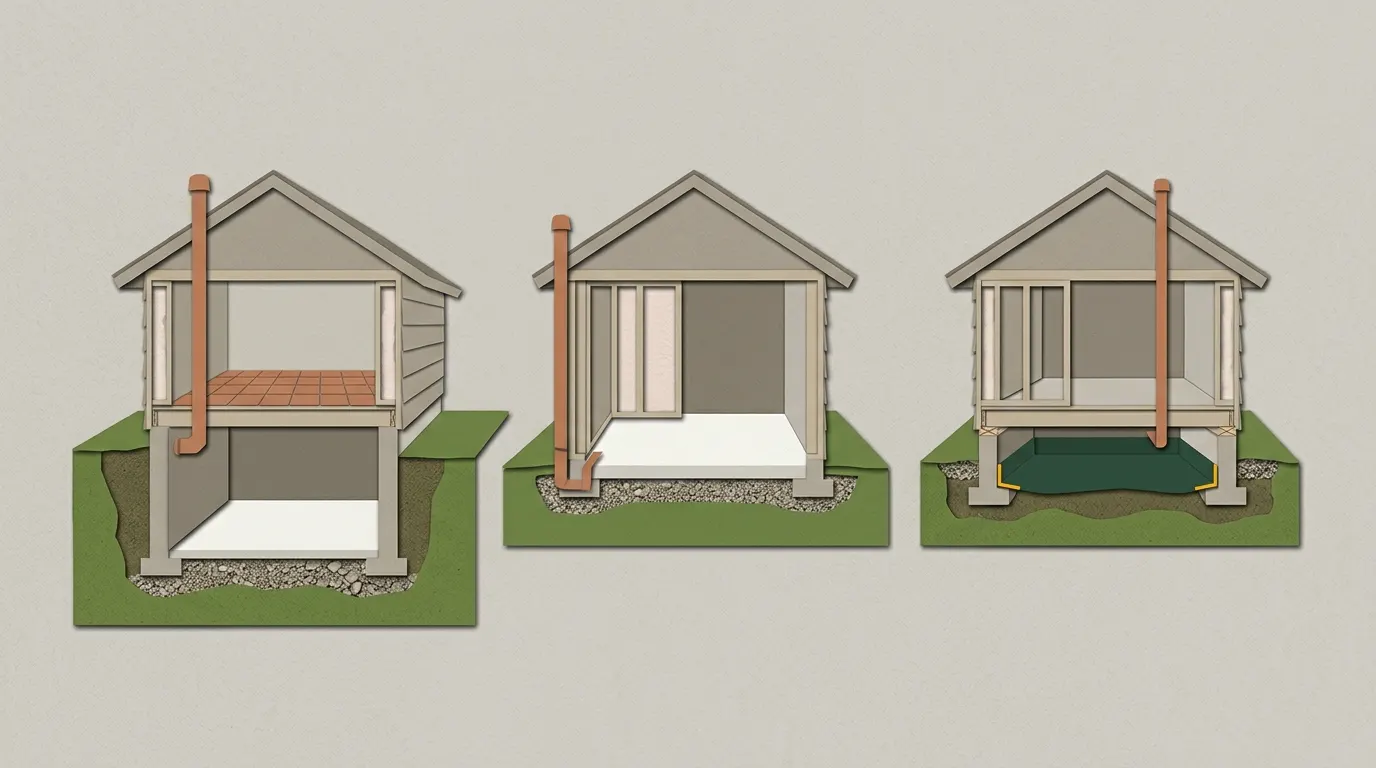
Foundation type
Our sources give one price for basement and slab homes: $1,200–$2,500, typical $1,850, in the source that names them. The calculator's main range of $850–$2,500 applies to both. Fixr, one of our sources, notes that the foundation doesn't change the cost very much, though a contractor will still plan the job around it.
Crawl spaces
A crawl space with a dirt floor often needs a plastic membrane sealed over the soil, with the pipe drawing air from under it. No source gives a full system price for crawl spaces. One source prices crawl space encapsulation, a sealed membrane over the floor and walls, at $500–$1,500, typical $1,000. Another prices dirt-floor sealing at $300–$1,000, typical $650. Both are single-source figures, so ask your contractor to quote the membrane as its own line. Our crawl space encapsulation cost calculator prices that work in more detail.
Sealing
Sealing visible cracks and floor openings is part of most installs. Larger sealing jobs cost more: one source prices basement sealing at $3,000–$5,000, typical $4,000. That's not in the calculator, and many homes don't need it. Ask whether a quote includes sealing and how much.
Pipe route
The pipe can run through the inside of the house to the roof, or up the outside wall. An inside route through closets or the garage is often neater but can take longer. An outside route is quicker but more visible. Where your pipe can go affects labor time more than anything else.
Number of systems
Homes with separate foundation sections may need more than one suction point or system. Set the number in the calculator, and it multiplies the installed price.
Testing before and after
A professional radon test runs $130–$600, typical $360, from two sources. A do-it-yourself test kit runs $15–$50, typical $33; our four sources on kits disagree a lot, partly because some include the lab fee and some don't.
Testing matters twice. Before mitigation, it tells you whether you need a system. After the system is running, a follow-up test shows whether it's working. Ask whether the contractor's price includes that follow-up test or whether you arrange it.
When to budget toward the high end
The typical price assumes one system in a basement or slab home with a simple pipe route. Plan nearer the high number if your home has more than one foundation section, if the pipe must run through finished rooms, if the floor needs extensive sealing, or if your crawl space needs a membrane. Plan toward the low end if the slab is open and the pipe can run straight up through a garage.
Radon mitigation cost by state
Labor is about 73% of a radon mitigation bill in the calculator, so local wages explain most of the gap between states. The typical price runs from $1,070 in Arkansas, $1,100 in Louisiana and $1,120 in Alabama to $1,590 in Alaska, $1,600 in Illinois and $1,850 in New York.
- Alabama$1,120
- Alaska$1,590
- Arizona$1,350
- Arkansas$1,070
- California$1,510
- Colorado$1,550
- Connecticut$1,290
- Delaware$1,230
- District of Columbia$1,590
- Florida$1,200
- Georgia$1,340
- Hawaii$1,570
- Idaho$1,340
- Illinois$1,600
- Indiana$1,280
- Iowa$1,340
- Kansas$1,250
- Kentucky$1,300
- Louisiana$1,100
- Maine$1,300
- Maryland$1,340
- Massachusetts$1,350
- Michigan$1,270
- Minnesota$1,540
- Mississippi$1,140
- Missouri$1,530
- Montana$1,440
- Nebraska$1,310
- Nevada$1,300
- New Hampshire$1,460
- New Jersey$1,500
- New Mexico$1,410
- New York$1,850
- North Carolina$1,210
- North Dakota$1,550
- Ohio$1,270
- Oklahoma$1,220
- Oregon$1,370
- Pennsylvania$1,320
- Rhode Island$1,280
- South Carolina$1,330
- South Dakota$1,370
- Tennessee$1,550
- Texas$1,240
- Utah$1,330
- Vermont$1,290
- Virginia$1,270
- Washington$1,580
- West Virginia$1,280
- Wisconsin$1,300
- Wyoming$1,320
Ways to lower the cost
- Test first. A test kit costs far less than a system and tells you whether you need one.
- Ask about the pipe route. An exterior or garage route can cut labor time.
- Seal what you can. Ask whether simple crack sealing you do yourself would reduce the quote.
- Compare system types. Ask each contractor which type fits your foundation and why.
- Check what's included. A quote that includes the follow-up test may be the better deal.
Hiring tips
Get at least two or three written quotes. Ask each contractor which system type they propose, where the pipe and fan will go, what sealing is included, and whether a follow-up test is part of the price. Have each list labor, the fan, the pipe, sealing, any membrane and any permit as separate lines, then compare them with the breakdown above.
Some states license or certify radon contractors. Your state radon program can tell you what applies where you live and may keep a list. Ask about the fan warranty and what the contractor does if the follow-up test still shows high levels. Check for insurance. Bring the ballpark. Ask for the line items.