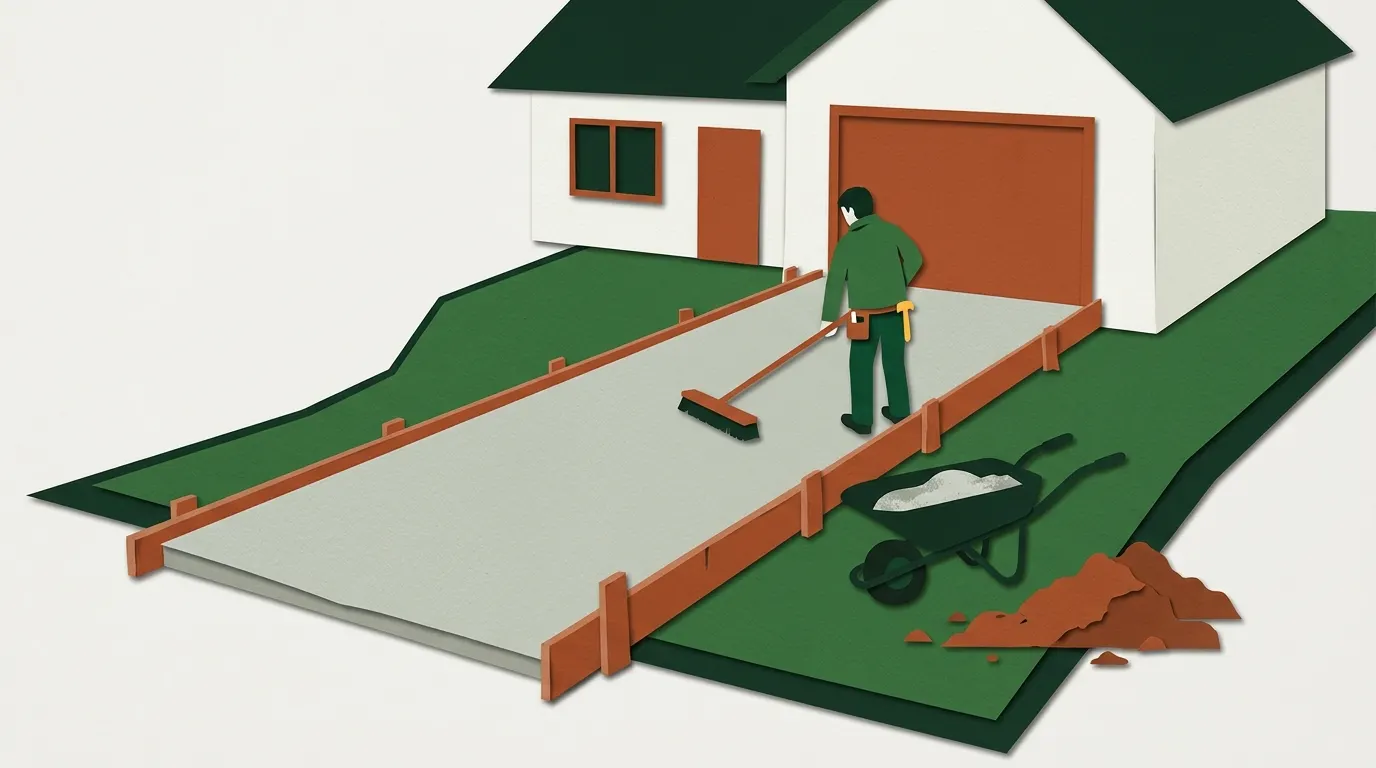
National ballpark · a new 600 sq ft concrete driveway with a broom finish
This is a planning range, not a quote.
| Cost | Low | Typical | High |
|---|---|---|---|
| Materials | $2,640 | $3,260 | $3,890 |
| Labor | $2,160 | $2,670 | $3,180 |
| Total | $4,800 | $5,930 | $7,070 |
How this concrete driveway cost calculator works
Enter your ZIP code, the driveway's area in square feet, the thickness and the finish. Tick the box if an old driveway has to come out first. The calculator multiplies your area by an installed price per square foot for the finish you picked, adds removal if you need it, then adjusts the result for wages and prices in your state.
To find the area, multiply length by width. A single-car driveway 10 feet wide and 60 feet long is 600 sq ft, which is the example we use on this page.
You get three numbers. Low is what a simple pour on a flat, ready site can cost. Typical is where most quotes land. High covers tougher sites, extra prep and busy seasons. The breakdown splits the bill into materials and labor. In our data, labor is about 45% of a concrete driveway, which means the concrete, base and forms make up a slightly larger share than the work.
The state adjustment uses construction wages from the Bureau of Labor Statistics for labor and regional price levels from the Bureau of Economic Analysis for materials. The full method is on our How we calculate page.
This is a planning range, not a quote. A contractor who sees your lot will spot slope, soft soil and drainage that no calculator can.
What the estimate includes
The installed price per square foot covers the concrete, the forms, the pour and the finish you picked, on a site that's ready to build on. Removal of an old driveway is added only when you tick the box. Several lines that often show up on real driveway quotes aren't inputs here:
- Excavation and grading, priced by the hour in our data.
- Gravel base under the slab.
- Reinforcement, such as rebar or wire mesh.
- Sealer on the finished surface.
- A permit, which most places don't require for a driveway.
Ask every contractor to price these as separate lines so you can see what's in each quote.
Concrete driveway cost by finish
The finish sets the price per square foot. A broom finish is the standard: a light, grippy texture pulled across the wet concrete. Exposed aggregate means the top layer is washed away to show the small stones mixed into the concrete. Stamped concrete has a pattern pressed in, often brick, slate or cobblestone.
| Option | Low | Typical | High | Unit |
|---|---|---|---|---|
| Broom | $8.00 | $9.89 | $12 | /sq ft |
| Exposed aggregate | $8.00 | $11 | $13 | /sq ft |
| Stamped | $12 | $15 | $18 | /sq ft |
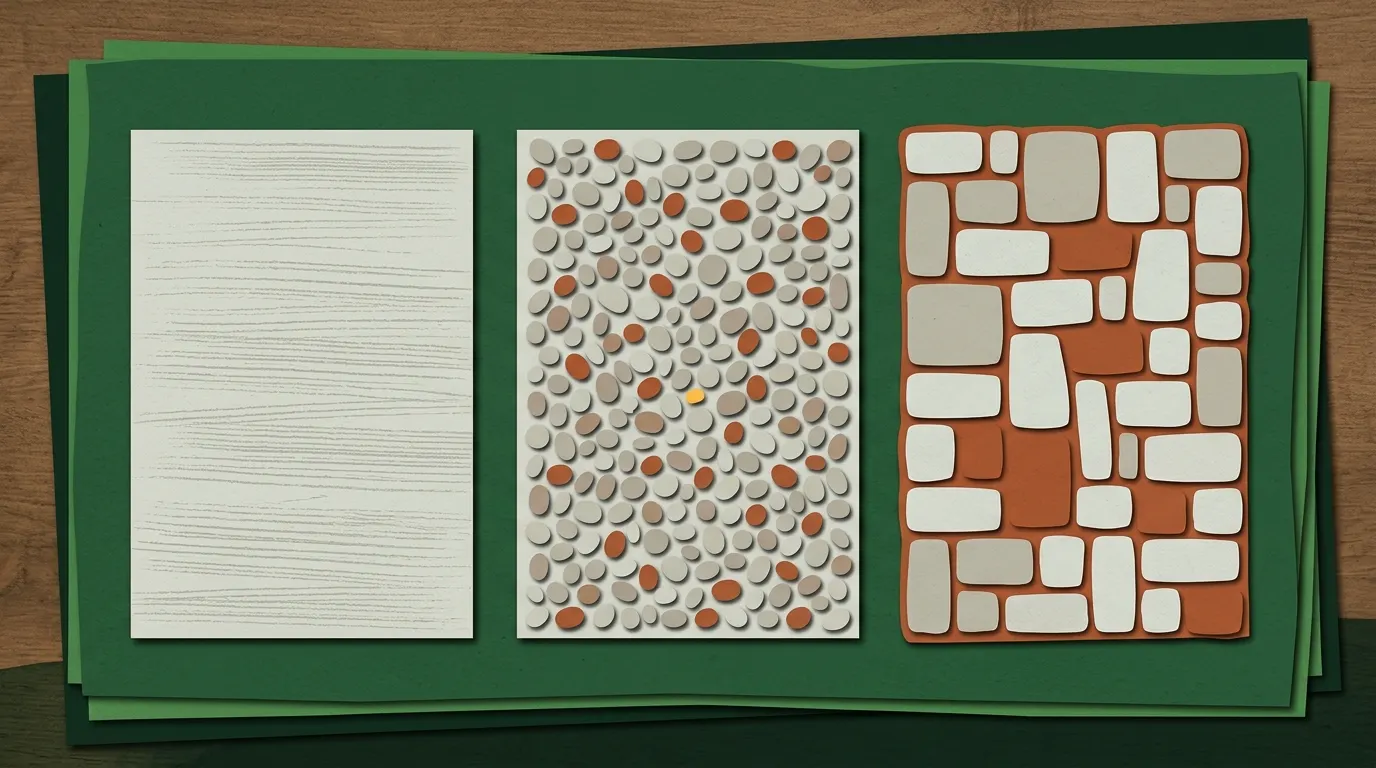
For our 600 sq ft example, exposed aggregate costs $4,800–$7,800 (typical $6,300), and stamped concrete $7,200–$10,800 (typical $9,000). Stamped has the most backing in our data, with five sources; exposed aggregate has two.
What affects the price
Size
Area drives the bill directly. A two-car driveway or a long rural one can be several times the size of our example, and the price scales with it. Measure before you call, and include any parking pad or turnaround.
Finish
Going from a broom finish to stamped concrete takes our typical example from $5,930 to $9,000. Exposed aggregate costs a little more than broom on a typical job. If you want a decorative look on a budget, one option is a broom-finished driveway with a decorative border; ask contractors to price it both ways.
Old driveway removal
Tearing out old pavement runs $1.75–$6.00 per square foot, typical $2.50. Our sources disagree widely on this rate, so treat it as a rough guide. On our 600 sq ft example, removal moves the total to $5,850–$10,700, typical $7,430. Ask whether haul-away and disposal are included.
Thickness
The thickness input doesn't change the total, because our sources price driveways by area, not by depth. A thicker slab does use more concrete, at $120–$160 per cubic yard in our data. I'd expect a quote for a thicker driveway to land toward the high end of the range.
Reinforcement
Rebar or wire mesh isn't an input. One source puts it at $1.00–$3.00 per square foot, typical $2.00. It's a common line on driveway quotes, so ask about it.
Grading and base
The ground under a driveway is often dug out, leveled and topped with a layer of compacted gravel before the pour. One source prices excavation and grading at $50–$70 per hour. A sloped lot or soft soil can make this a big part of the job, and our calculator doesn't include it as a separate line.
When to budget toward the high end
Plan nearer the high number if your lot slopes, if the soil is soft or wet, if the driveway meets a busy street, or if the truck can't back up close to the forms. Decorative borders, color and a sealer also add to the bill: sealing runs $1.00–$2.00 per square foot in our data. A long or curved driveway takes more form work per foot than a straight one.
Concrete, asphalt or gravel?
Concrete costs more to put in than asphalt in our data, and both cost more than gravel. Upkeep differs too: concrete may get a sealer, asphalt is usually sealcoated from time to time, and gravel needs topping up and raking. To compare all three for your state, run the same area through our asphalt driveway cost calculator and gravel driveway cost calculator.
Concrete driveway cost by state
Labor is just under half of a concrete driveway bill, so both local wages and regional material prices shape the gap between states. For our 600 sq ft example, the typical price runs from $5,200 in Mississippi and Oklahoma to $7,820 in Alaska and $8,130 in Hawaii. Illinois is at $7,050.
- Alabama$5,240
- Alaska$7,820
- Arizona$5,870
- Arkansas$5,220
- California$6,400
- Colorado$6,070
- Connecticut$5,920
- Delaware$5,810
- District of Columbia$6,370
- Florida$5,480
- Georgia$5,390
- Hawaii$8,130
- Idaho$5,780
- Illinois$7,050
- Indiana$5,990
- Iowa$5,790
- Kansas$5,510
- Kentucky$5,480
- Louisiana$5,360
- Maine$5,780
- Maryland$5,780
- Massachusetts$6,220
- Michigan$5,940
- Minnesota$6,410
- Mississippi$5,200
- Missouri$6,020
- Montana$6,020
- Nebraska$5,390
- Nevada$6,010
- New Hampshire$5,760
- New Jersey$6,370
- New Mexico$5,450
- New York$6,500
- North Carolina$5,350
- North Dakota$5,830
- Ohio$6,010
- Oklahoma$5,200
- Oregon$6,640
- Pennsylvania$6,130
- Rhode Island$6,120
- South Carolina$5,460
- South Dakota$5,320
- Tennessee$5,390
- Texas$5,430
- Utah$5,790
- Vermont$6,040
- Virginia$5,660
- Washington$7,040
- West Virginia$5,580
- Wisconsin$6,090
- Wyoming$5,850
Ways to lower the cost
- Pick the broom finish. It's the cheapest of the three and the most common.
- Keep the shape simple. Straight edges and fewer curves mean less form work.
- Size it to your needs. A narrower driveway or a smaller turnaround cuts square footage directly.
- Ask about removal. Get a price with and without tear-out, and ask whether removal costs less when it's bundled with the new pour.
- Ask about timing. If your date is flexible, ask whether a slower month would change the price.
Hiring tips
Get at least three written quotes for the same driveway: same area, thickness, finish and reinforcement. Ask each contractor to list removal, excavation, gravel base, forms, concrete, reinforcement, finishing and sealing as separate lines, then compare them with the breakdown above. A quote far below our low number deserves questions about thickness, base depth and what's left out.
Ask who handles a permit if your city needs one, and who calls the utility locator before digging. Get the start date, the curing time before you can drive on it and the payment schedule in writing. Check that the company has a license where your state requires one, and ask for proof of insurance. Bring the ballpark. Ask for the line items.