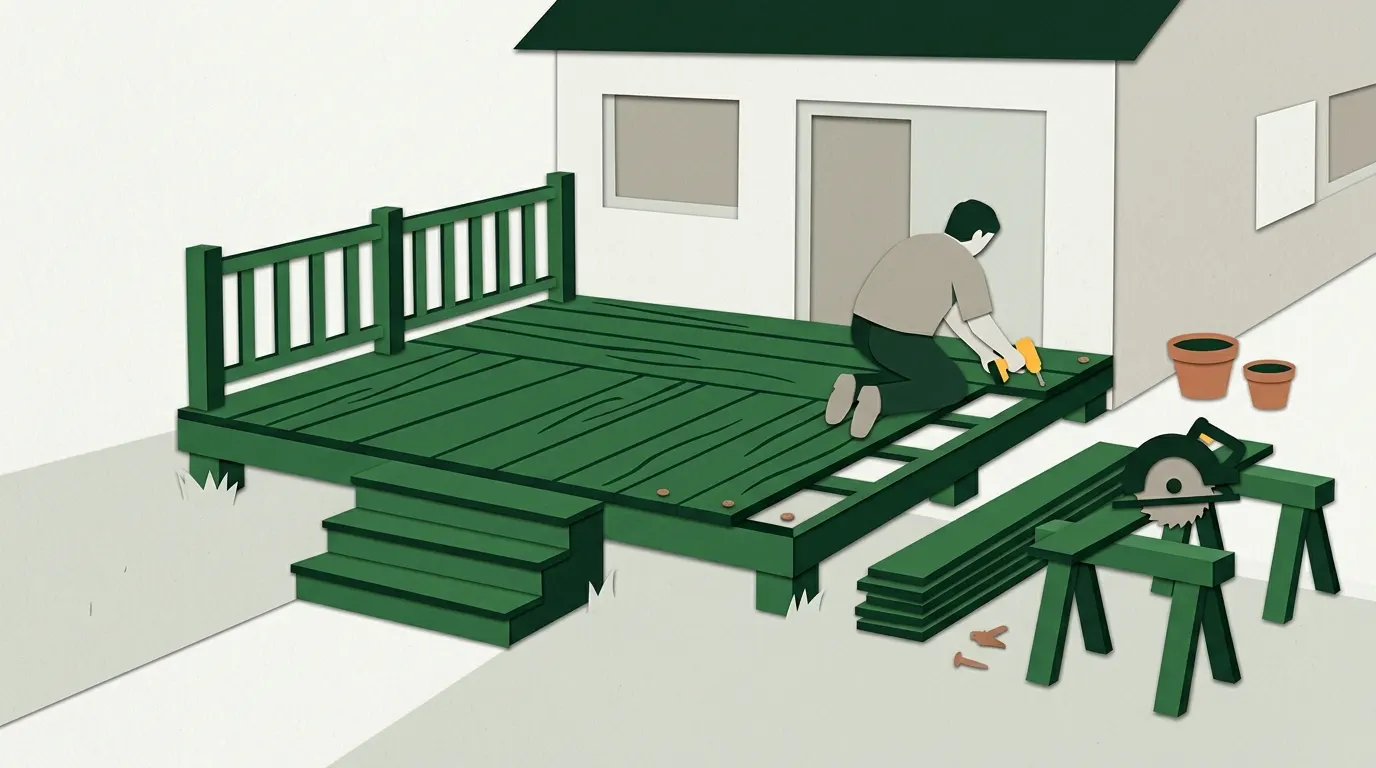
National ballpark · a 320 sq ft (16 x 20 ft) pressure-treated wood deck
This is a planning range, not a quote.
Limited data: deck permit (sources disagree). The real range may be wider.
| Cost | Low | Typical | High |
|---|---|---|---|
| Materials | $1,470 | $3,140 | $4,800 |
| Labor | $2,210 | $4,700 | $7,200 |
| Permit (varies by city) national | $200 | $350 | $500 |
| Total | $3,880 | $8,190 | $12,500 |
How this deck cost calculator works
Enter your ZIP code, the deck's area in square feet, the decking material, the height, the length of railing you need and whether the deck has stairs. The calculator multiplies your area by an installed price per square foot for that material, adds railing by the foot, adds stairs if you tick them, adds a permit fee, then adjusts the result for wages and prices in your state.
You get three numbers. Low is what a simple deck on flat ground can cost. Typical is where most quotes land. High covers harder sites, more framing and busy seasons. The breakdown splits the bill into materials, labor and the permit. Labor is about 60% of a deck job in our data, because framing, setting posts and fastening boards are mostly hand work.
The state adjustment uses construction wages from the Bureau of Labor Statistics for the labor part and regional price levels from the Bureau of Economic Analysis for the materials part. The permit fee isn't adjusted, because cities set it. The full method is on our How we calculate page.
This is a planning range, not a quote. A builder who sees your yard will spot slope, soil and access problems that no calculator can.
What the estimate includes and leaves out
The default 320 sq ft example has no railing and no stairs, so it fits a low deck close to the ground. Add both if your deck needs them, because together they can change the total a lot.
Height is an input, but it doesn't change the number. Our sources price decks by height in one table and by board material in another, and none of them combines the two, so we can't add a height charge without counting some costs twice. The table by height below shows how much more a tall deck costs per square foot. If your deck sits well off the ground, plan toward the high end or above.
Removing an old deck, built-in benches, lighting, a pergola or a roof aren't in the estimate either.
Deck cost by decking material
The boards you walk on set most of the price, because they also decide the fasteners, the framing spacing and how long installation takes.
| Option | Low | Typical | High | Unit |
|---|---|---|---|---|
| Cedar | $20 | $36 | $52 | /sq ft |
| Composite | $25 | $39 | $52 | /sq ft |
| Pressure-treated wood | $12 | $25 | $38 | /sq ft |
| Pvc * | $17 | $25 | $33 | /sq ft |
* Limited data: one source, sources that disagree widely, or a single figure.
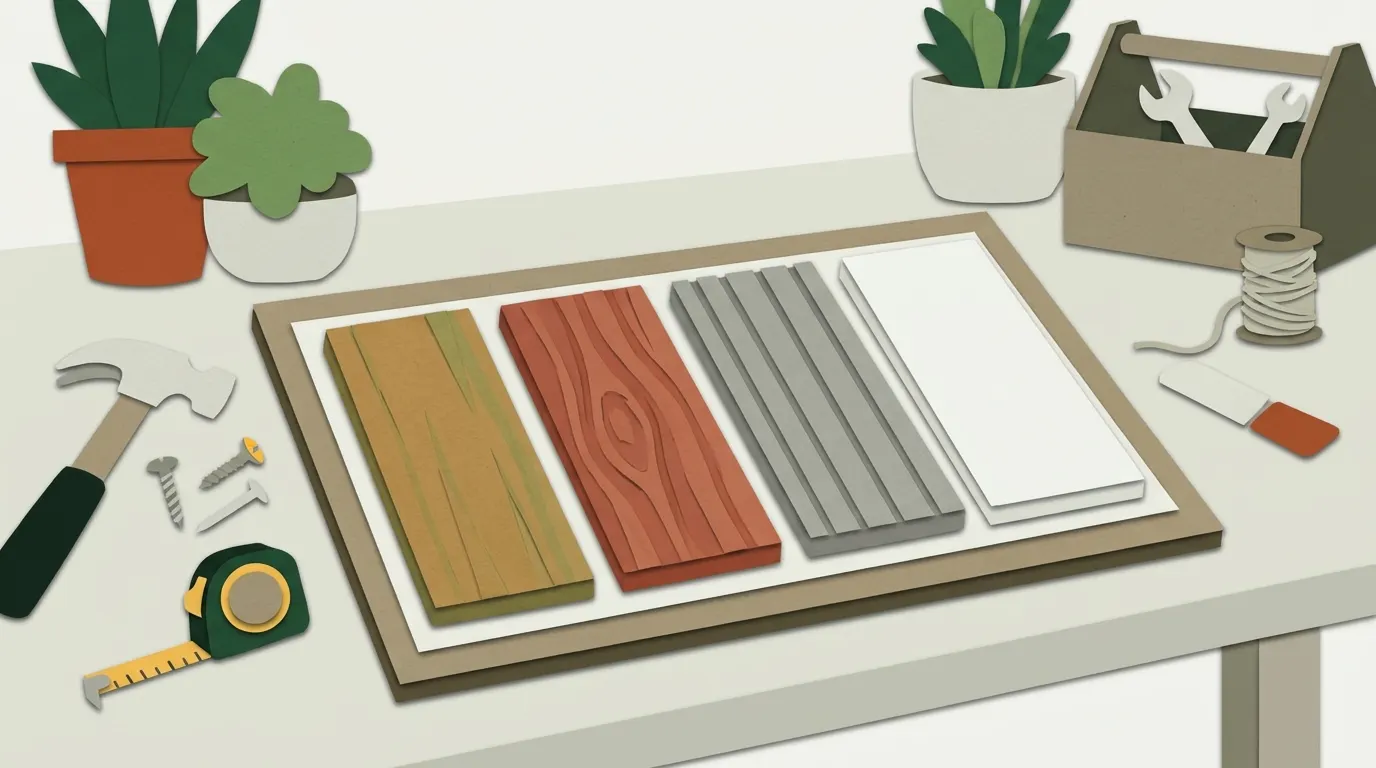
On our 320 sq ft example, pressure-treated wood comes to $3,880–$12,500 (typical $8,190), cedar to $6,440–$17,100 (typical $11,800) and composite to $8,200–$17,100 (typical $12,700). PVC lands at $5,640–$11,100 (typical $8,350). That PVC figure looks low next to composite because only one source prices installed PVC decks, so treat it with care.
Pressure-treated wood is lumber treated against rot and insects; it's the budget choice and needs regular sealing. Cedar resists rot on its own and costs more. Composite boards mix wood fiber and plastic, and PVC boards are all plastic; both skip staining. For a deeper look at the plastic-based option, see the composite deck cost calculator.
Deck cost by height
| Option | Low | Typical | High | Unit |
|---|---|---|---|---|
| Ground level | $10 | $15 | $20 | /sq ft |
| Raised * | $25 | $38 | $50 | /sq ft |
| Second story | $40 | $45 | $50 | /sq ft |
* Limited data: one source, sources that disagree widely, or a single figure.
These prices come from a different set of sources than the material table, which is why the calculator shows them as a guide only. A deck at ground level costs $10–$20 per square foot in this table. A raised deck runs $25–$50, a figure from one source. A second-story deck costs $40–$50, because it needs tall posts, heavy beams, deeper footings and, almost always, railing and stairs.
What affects the price
Size
Area drives the main line directly, since every square foot is priced the same. The permit and stairs don't grow with size. Measure the deck you want, not the patio space you have, and decide early whether it wraps a corner of the house.
Decking material
Going from pressure-treated wood to composite moves our typical example from $8,190 to $12,700. Material-only prices show why: pressure-treated boards run $3.00–$6.00 per square foot, cedar $4.00–$9.00 and composite $5.00–$14 before labor.
Railing
Railing is priced per linear foot of rail, at $35–$68, typical $51. Our four sources disagree a lot here. Measure every open edge that will need a rail, plus both sides of any stairs. A deck that's only a step or two above the ground may need little or no railing; ask your building department.
Stairs
A set of stairs adds $150–$1,500 to the estimate, typical $1,500, and moves our example to $4,030–$14,000 (typical $9,690). Sources price stairs very differently, from a single step to a full flight, so this line is rough. Tell each builder how many steps you need and how wide.
Height and the site
A tall deck needs bigger posts and footings, and a sloped yard can make one end of a deck much taller than the other. Rocky soil and tight access add labor too. None of this is priced separately in our data.
Permit
The calculator adds a $200–$500 permit, typical $350. Sources disagree on this fee, and your city may charge more or less.
When to budget toward the high end
Plan nearer the high number if the deck sits more than a few feet off the ground, if your yard slopes, if the deck attaches to the house, if you want premium boards, hidden fasteners or a custom railing, or if deck builders in your area are booked well ahead.
Deck cost by state
Labor is about 60% of a deck bill, so local wages explain most of the gap between states. For our 320 sq ft pressure-treated example, the typical price runs from $6,930 in Oklahoma, $6,990 in Arkansas and $7,080 in South Dakota to $9,570 in California, $9,740 in Illinois and $10,500 in Hawaii.
- Alabama$7,120
- Alaska$9,420
- Arizona$7,890
- Arkansas$6,990
- California$9,570
- Colorado$8,320
- Connecticut$8,380
- Delaware$7,960
- District of Columbia$8,480
- Florida$7,300
- Georgia$7,290
- Hawaii$10,500
- Idaho$7,410
- Illinois$9,740
- Indiana$8,230
- Iowa$7,770
- Kansas$7,730
- Kentucky$7,450
- Louisiana$7,160
- Maine$8,220
- Maryland$8,450
- Massachusetts$9,290
- Michigan$8,150
- Minnesota$8,550
- Mississippi$7,140
- Missouri$8,090
- Montana$7,930
- Nebraska$7,210
- Nevada$8,210
- New Hampshire$8,190
- New Jersey$8,680
- New Mexico$8,000
- New York$9,330
- North Carolina$7,200
- North Dakota$7,850
- Ohio$8,010
- Oklahoma$6,930
- Oregon$8,530
- Pennsylvania$8,080
- Rhode Island$8,120
- South Carolina$7,310
- South Dakota$7,080
- Tennessee$7,320
- Texas$7,220
- Utah$7,440
- Vermont$8,250
- Virginia$7,820
- Washington$9,380
- West Virginia$7,160
- Wisconsin$8,100
- Wyoming$7,760
Ways to lower the cost
- Keep the deck low. A deck near the ground needs less framing and often less railing.
- Pick boards for your upkeep plans. Pressure-treated wood costs least to build; plan time for sealing.
- Use a simple shape. A rectangle wastes fewer boards and less labor than angles and curves.
- Size it to how you'll use it. Every extra square foot adds to the main line.
- Tear out the old deck yourself if it's safe to do so, and ask what each builder would charge without removal.
Hiring tips
Get at least three written quotes for the same deck: same size, board, height, railing length and number of steps. Ask each builder to list framing lumber, decking, fasteners, footings, railing, stairs, the permit and removal as separate lines, then compare them with the breakdown above. A quote far below our low number deserves questions about footing depth, joist spacing and what's left out.
Ask who pulls the permit and schedules the inspections, and how the deck will attach to the house. Get the start date, payment schedule and warranty in writing, including any warranty on the boards themselves. I'd also ask what happens if the crew finds rot in the house wall where the deck connects. Check that the company has a license where your state requires one, and ask for proof of insurance. Bring the ballpark. Ask for the line items.