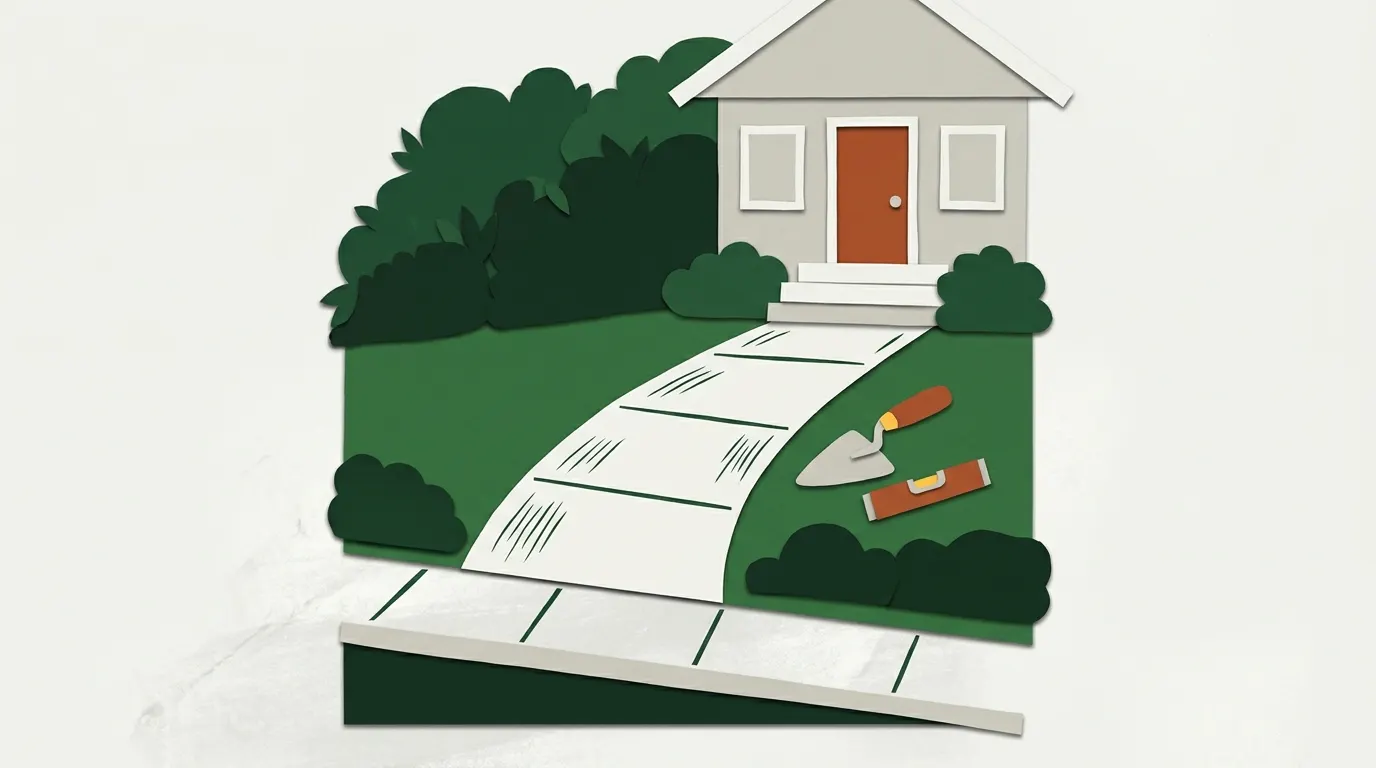
This page covers concrete sidewalks and walkways only. For slabs, pads and the full set of concrete inputs, use the main concrete slab cost calculator. A sidewalk or walkway is a long, narrow strip of concrete, often 3 to 5 feet wide, that connects a door, driveway, gate or street.
National ballpark · a 400 sq ft concrete sidewalk with a broom finish
This is a planning range, not a quote.
The sidewalk price includes base prep, forms and reinforcement; a broom finish is usually included.
| Cost | Low | Typical | High |
|---|---|---|---|
| Materials | $860 | $1,270 | $1,730 |
| Labor | $1,540 | $2,260 | $3,070 |
| Total | $2,400 | $3,530 | $4,800 |
How the concrete sidewalk cost calculator works
The project is set to sidewalk. Enter your ZIP code, the walk's area in square feet, the thickness, the reinforcement and the finish. To get the area, multiply the width by the length: a 4-ft walk that runs 100 feet is 400 sq ft. The calculator multiplies that area by an installed sidewalk price per square foot, adds stamping or staining if you choose one, then adjusts materials and labor for your state.
On the 400 sq ft example, the breakdown shows materials at $860–$1,730 (typical $1,270) and labor at $1,540–$3,070 (typical $2,260). Labor is about 64% of concrete work in our data, since forming, placing and finishing are done by hand. State wages from the Bureau of Labor Statistics and price levels from the Bureau of Economic Analysis adjust each part. The method is on How we calculate.
The number you get is a planning range. A contractor on site will see grade changes, tree roots and access that a calculator can't.
What the sidewalk price covers
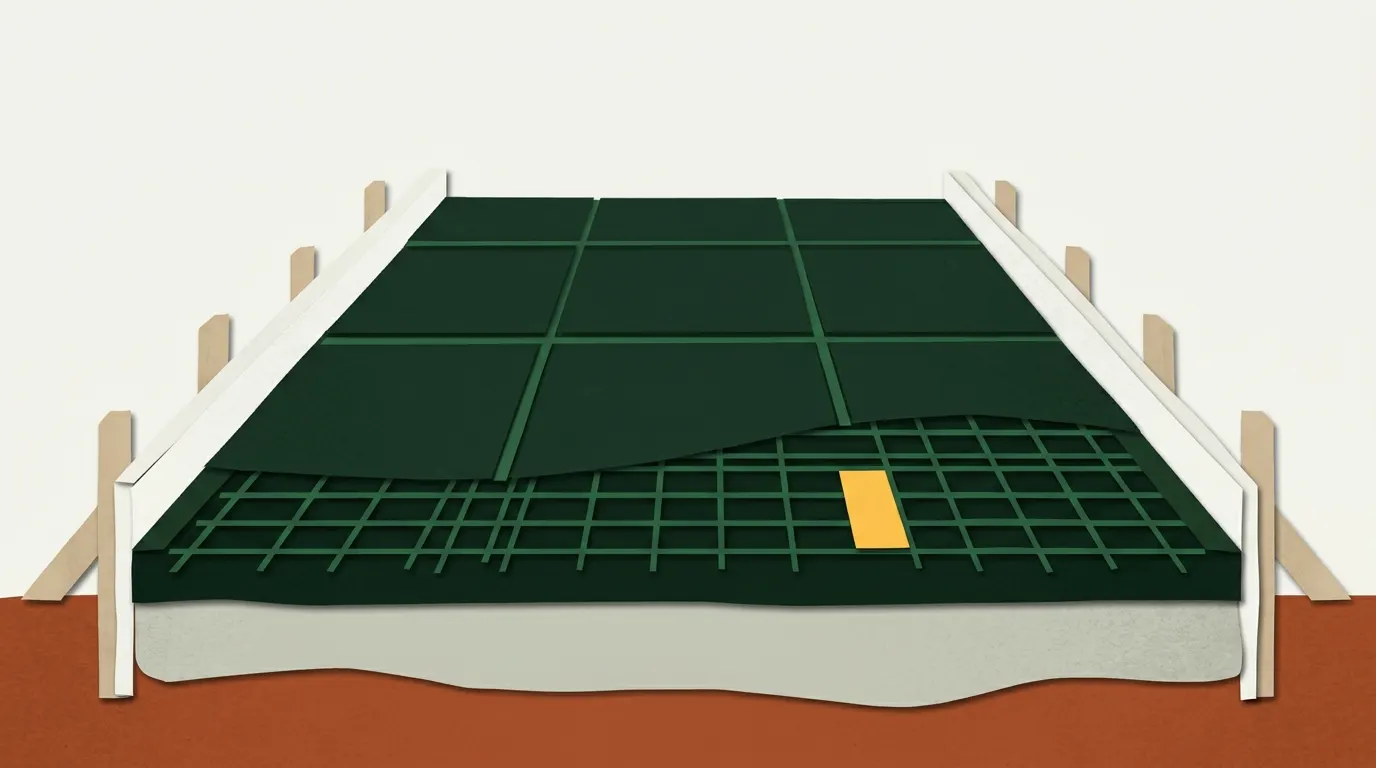
The sidewalk rate is installed and all-in. It includes the gravel base, the wooden forms along both edges, reinforcement and a broom finish, the rough texture that gives shoes grip on a wet walk. Our sources price sidewalks this way, so the reinforcement input doesn't change the estimate. Thickness doesn't either, because sources don't price walk thickness consistently. Set both so your quotes compare like for like.
Left out of the estimate: removing an old walk, steps where the walk meets a slope, edging or borders, a sealer and any city permit.
Concrete sidewalk cost per square foot
Installed, a concrete sidewalk costs $6.00–$12 per square foot, typical $8.82, from five sources. That range is narrower than the patio range in our data, which runs $5.25–$16.
| Option | Low | Typical | High | Unit |
|---|---|---|---|---|
| Patio | $5.25 | $11 | $16 | /sq ft |
| Sidewalk | $6.00 | $8.82 | $12 | /sq ft |
Four sources also quote a whole walkway project at $1,290–$2,210, typical $1,800. Those totals depend on the length each source had in mind, so the calculator uses the per-square-foot rate and your own measurements.
Finish options for a walk
A broom finish is standard on walks and comes with the price. Staining adds color through the surface. Stamping presses a pattern into the wet concrete, often to look like stone or brick pavers.
| Option | Low | Typical | High | Unit |
|---|---|---|---|---|
| Broom * | $0.40 | $0.70 | $1.00 | /sq ft |
| Stained | $3.50 | $5.50 | $7.50 | /sq ft |
| Stamped | $10 | $12 | $14 | /sq ft |
* Limited data: one source, sources that disagree widely, or a single figure.
For our 400 sq ft walk:
- Broom finish: $2,400–$4,800, typical $3,530
- Stained: $3,800–$7,800, typical $5,730
- Stamped: $6,400–$10,400, typical $8,330
A deep stamped pattern can feel uneven underfoot and hold water or ice in the grooves, so ask to see a finished sample if the walk is the main way to your door. Only one source prices the broom-finish rate, but it's already part of the walk price, so that doesn't change your estimate.
What affects the price
Length and width
Area sets the bill, so both width and length count. Going from a 3-ft to a 4-ft walk adds a third more concrete for the same length. Decide the width before you get quotes, and measure along the actual path, including any curves.
Finish
Going from broom to stamped takes our typical example from $3,530 to $8,330. Stamping adds $10–$14 per square foot, and staining $3.50–$7.50, typical $5.50.
Curves and grade
Straight walks are the cheapest to form. Curves take more time to set and finish. A walk that climbs a slope may need steps or extra grading, and our data doesn't price either on its own.
Old walk removal
Tearing out an old walkway runs $5.00–$8.00 per square foot, typical $6.50, from a single source. That's not in the estimate.
Public sidewalk rules
A walk in your own yard is your call. A public sidewalk along the street usually has to meet city rules for width, thickness and slope, and the city may require a permit or its own approved contractor. The calculator doesn't price any of that, so check before you collect quotes.
Measuring your walk
Walk the route with a tape measure and mark where the concrete will start and stop. Measure the length along the center of the path, then multiply by the width you want. If the walk changes width, for example where it widens near the steps, measure each part on its own and add the areas. A landing at the door counts too. Round up a little rather than down, so the estimate doesn't fall short of the real pour.
When to budget toward the high end
Plan nearer the high number if the walk climbs a slope, curves around beds or trees, crosses roots that have to be cut, or sits where the truck can't park close. Also plan high if you want a stamped or colored finish, if an old walk has to be broken out first, or if concrete crews in your area are booked weeks ahead. A short walk can also cost more per square foot than our rate, since setup and the truck visit cost about the same whatever the length.
Concrete sidewalk cost by state
About 64% of a sidewalk bill is labor, so local wages explain most of the gap between states. For our 400 sq ft example with a broom finish, the typical price runs from $2,960 in Mississippi, $2,990 in Alabama and $3,000 in Oklahoma to $4,410 in Illinois, $5,030 in Alaska and $5,210 in Hawaii.
- Alabama$2,990
- Alaska$5,030
- Arizona$3,540
- Arkansas$3,020
- California$3,830
- Colorado$3,660
- Connecticut$3,560
- Delaware$3,480
- District of Columbia$3,800
- Florida$3,170
- Georgia$3,090
- Hawaii$5,210
- Idaho$3,460
- Illinois$4,410
- Indiana$3,640
- Iowa$3,500
- Kansas$3,260
- Kentucky$3,210
- Louisiana$3,140
- Maine$3,440
- Maryland$3,360
- Massachusetts$3,780
- Michigan$3,590
- Minnesota$3,920
- Mississippi$2,960
- Missouri$3,660
- Montana$3,660
- Nebraska$3,160
- Nevada$3,650
- New Hampshire$3,400
- New Jersey$3,790
- New Mexico$3,170
- New York$3,900
- North Carolina$3,080
- North Dakota$3,500
- Ohio$3,680
- Oklahoma$3,000
- Oregon$4,050
- Pennsylvania$3,700
- Rhode Island$3,730
- South Carolina$3,180
- South Dakota$3,080
- Tennessee$3,120
- Texas$3,130
- Utah$3,460
- Vermont$3,660
- Virginia$3,290
- Washington$4,400
- West Virginia$3,280
- Wisconsin$3,740
- Wyoming$3,530
Ways to lower the cost
- Keep it straight. Gentle, simple lines need less forming than curves.
- Choose the width you need. A narrower walk uses less concrete for the same length.
- Stay with broom finish on a walk you use every day; it's included and gives good grip.
- Pair it with other concrete work. A walk poured with a patio or slab can share one crew visit.
- Remove the old walk yourself only if you can break it up and haul it safely.
Hiring tips
Get at least three written quotes for the same walk: same width, length, finish and thickness. Ask each contractor to list base prep, forms, concrete, reinforcement, finishing, joints and any removal and haul-away as separate lines, then compare them with the breakdown above.
Ask how far apart they'll cut the control joints, the grooves that guide where concrete cracks, and how the walk will slope to shed water. If the walk meets the street, ask who handles city approval. Confirm who calls the utility locator before digging, and get the pour date, cure time and payment schedule in writing. Check for a license where your state requires one, and ask for proof of insurance. Bring the ballpark. Ask for the line items.