This page prices kitchen cabinets on their own. To price a whole kitchen with countertops, appliances and flooring, use the main kitchen remodel cost calculator. Here the project is set to cabinets only, so you enter the length of your cabinet runs in linear feet instead of the floor area of the room.
National ballpark · 25 linear ft of stock kitchen cabinets, installed
This is a planning range, not a quote.
Countertops, appliances and plumbing are not included — switch the project to a full remodel to see them.
| Cost | Low | Typical | High |
|---|---|---|---|
| Cabinets | $1,980 | $3,950 | $5,930 |
| Installation | $530 | $1,050 | $1,580 |
| Old cabinet removal | $350 | $580 | $800 |
| Total | $2,850 | $5,580 | $8,300 |
How the kitchen cabinet cost calculator works
Enter your ZIP code, the total length of your cabinets in linear feet and the type of cabinet you want: stock, semi-custom, custom or refacing the cabinets you already have. The calculator multiplies your length by an installed price per linear foot for that type. Unless you choose refacing, it then adds a line for taking out the old cabinets. Finally, it adjusts the result for wages and prices in your state.
The form still shows finish level and countertop, because it shares one set of fields with the full kitchen calculator. On this page those two fields don't change the estimate. Only the cabinet type and the length do.
On our 25-foot stock example, the breakdown shows:
- Cabinets: $1,980–$5,930, typical $3,950
- Installation: $530–$1,580, typical $1,050
- Old cabinet removal: $350–$800, typical $580
The installed price per linear foot is split between the cabinets themselves and the work of hanging them. Four sources each give a share for installation, and the calculator uses the middle of their figures, about 21%. Wages in your state shift the installation line, and regional price levels shift the cabinet line. The full method is on How we calculate.
There's no permit line in a cabinets-only estimate. Swapping boxes on the same walls is often simple, but if your job also moves a sink or adds wiring, ask your city whether it needs a permit.
How to measure cabinet length in linear feet
A linear foot is one foot of cabinet measured along the wall. Depth and height don't count, so a 3-foot base cabinet and a 3-foot wall cabinet each add 3 linear feet.
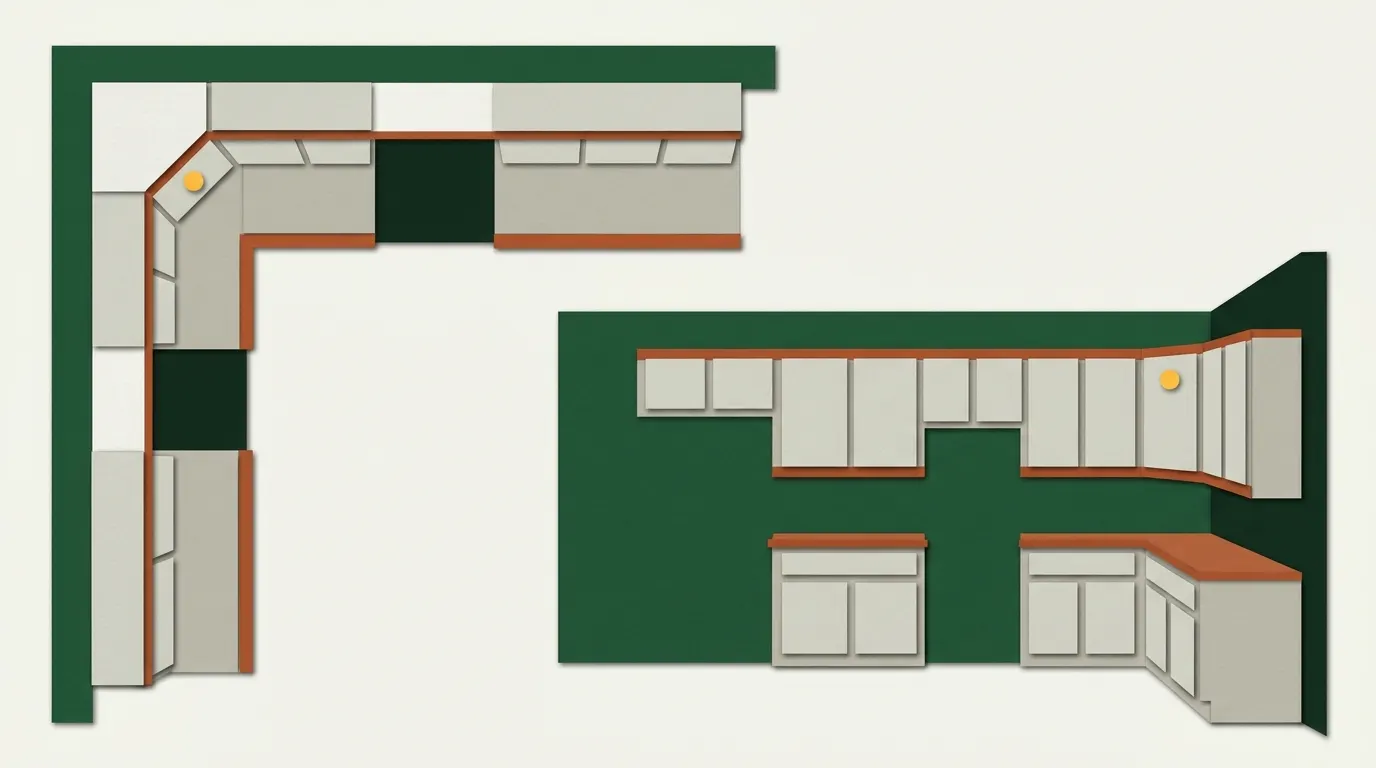
Measure the upper and lower runs separately, then add them together. If base cabinets run 12 feet along one wall and wall cabinets above them run 10 feet, that wall counts as 22 linear feet. Add the base cabinets of an island the same way. I'd count a tall pantry or oven cabinet once, by its width, and measure corners along each wall without counting the corner box twice.
Our 25-foot example might fit a small kitchen with uppers and lowers on two walls. A larger kitchen with an island can easily run double that, so measure before you trust the default.
Kitchen cabinet cost per linear foot by type
Cabinet grade is the biggest choice you'll make on this page. The prices below are installed and national, before your state adjustment.
| Option | Low | Typical | High | Unit |
|---|---|---|---|---|
| Custom | $500 | $850 | $1,200 | /linear ft |
| refacing * | $95 | $210 | $280 | /linear ft |
| Semi-custom | $180 | $410 | $650 | /linear ft |
| Stock | $100 | $200 | $300 | /linear ft |
* Limited data: one source, sources that disagree widely, or a single figure.
Stock cabinets come in set widths and a short list of colors, and they're usually ready in days or weeks. They run $100–$300 per linear foot, typical $200. On 25 feet with removal, that's $2,850–$8,300, typical $5,580.
Semi-custom cabinets start from standard boxes but offer more sizes, finishes and inserts. They run $180–$650 per linear foot, typical $410. On 25 feet, the estimate rises to $4,730–$17,100, typical $10,900. The range is wide because semi-custom covers everything from a stock line with extra options to near-custom work.
Custom cabinets are built for your room. They run $500–$1,200 per linear foot, typical $850, which puts 25 feet at $12,900–$30,800, typical $21,800.
The grades overlap. A high-end semi-custom line at $650 a foot costs more than a low-end custom shop at $500. Compare the quote you get, not the label on the catalog.
Refacing vs replacing your cabinets
Refacing keeps your cabinet boxes and covers them with new veneer, then adds new doors and drawer fronts. It runs $95–$280 per linear foot, typical $210. Our refacing sources disagree widely, so this range is less firm than the others.
On 25 feet, refacing comes to $2,380–$7,000, typical $5,310. The calculator leaves out the removal line here, since the boxes stay where they are. That typical price lands close to new stock cabinets at $5,580. In our data, refacing saves the most when the alternative is semi-custom or custom cabinets, not stock.
Refacing only makes sense if the boxes are solid and you like the layout. Water damage under the sink, sagging shelves or a layout you want to change all point toward new cabinets. Sources that price refacing as a whole job put it at $4,500–$12,500, typical $7,160, which reflects kitchens with more cabinets than our example.
What affects the price
Cabinet length
Length drives the cabinet and installation lines in a straight line: double the feet, double those two lines. The removal fee is priced per job, so it stays the same whether you have 15 feet or 40. That makes small jobs cost a little more per foot than large ones.
Cabinet type
Moving from stock to semi-custom roughly doubles the typical price on our 25-foot example, and custom roughly doubles it again. The type also changes lead time. Stock cabinets are often on hand, while custom ones take longer to build, which can stretch a kitchen project.
Installation work
Sources that price installation on its own put it at $50–$200 per linear foot, typical $130. That's more than the installation line in our breakdown, because the calculator splits an installed price rather than adding a separate labor rate. If you buy cabinets yourself and hire someone to hang them, use that per-foot range to judge the labor quote. Uneven walls and floors, a lot of filler strips, or crown molding at the top add time.
Old cabinet removal
Tear-out runs $350–$800, typical $580, from three sources. It covers taking the old cabinets off the wall. Ask whether disposal is included, and whether the installer will patch the wall behind them.
What the estimate leaves out
The calculator prices cabinets and their installation. It doesn't price countertops, a backsplash, new hardware beyond what ships with the cabinets, moving a sink or range, new wiring for under-cabinet lights, or painting the walls. If the old countertop comes off with the base cabinets, you'll need a new one. The countertop cost calculator prices that part.
Kitchen cabinet cost by state
Installation is only about 21% of the bill, so state wages move the price less here than on jobs that are mostly labor. For our 25-foot stock example, the typical price runs from $5,030 in Arkansas, $5,160 in Oklahoma and $5,210 in South Dakota to $6,280 in Alaska, $6,310 in Illinois and $6,540 in Hawaii.
- Alabama$5,260
- Alaska$6,280
- Arizona$5,330
- Arkansas$5,030
- California$6,080
- Colorado$5,520
- Connecticut$5,650
- Delaware$5,410
- District of Columbia$6,190
- Florida$5,320
- Georgia$5,390
- Hawaii$6,540
- Idaho$5,290
- Illinois$6,310
- Indiana$5,500
- Iowa$5,270
- Kansas$5,310
- Kentucky$5,330
- Louisiana$5,220
- Maine$5,540
- Maryland$5,770
- Massachusetts$5,900
- Michigan$5,590
- Minnesota$5,910
- Mississippi$5,270
- Missouri$5,450
- Montana$5,570
- Nebraska$5,220
- Nevada$5,470
- New Hampshire$5,530
- New Jersey$6,080
- New Mexico$5,360
- New York$6,150
- North Carolina$5,270
- North Dakota$5,380
- Ohio$5,300
- Oklahoma$5,160
- Oregon$6,260
- Pennsylvania$5,590
- Rhode Island$5,600
- South Carolina$5,260
- South Dakota$5,210
- Tennessee$5,300
- Texas$5,360
- Utah$5,350
- Vermont$5,460
- Virginia$5,540
- Washington$6,160
- West Virginia$5,310
- Wisconsin$5,520
- Wyoming$5,420
Ways to lower the cost
- Reface when the boxes are sound and the alternative is semi-custom or custom.
- Mix grades. Stock base cabinets with a few semi-custom pieces where they show can look finished for less.
- Keep the layout. Cabinets that go back in the same spots avoid plumbing and wiring work.
- Use standard widths. Filler strips cost less than a custom box built to fill a gap.
- Skip uppers on one wall. Open shelving or a bare wall cuts linear feet from the order.
- Do the tear-out yourself if you can take the old cabinets down without damaging the wall.
Hiring tips
Get at least three written quotes for the same cabinets: the same line, the same door style, the same total length. Ask each installer to list cabinets, installation, removal, disposal, hardware and any filler or trim pieces as separate lines, then compare them with the breakdown above.
Ask who orders the cabinets, who checks them on delivery and who pays if a box arrives damaged. Get the lead time in writing. I'd also ask how the installer levels cabinets on an uneven floor and how the uppers attach to the wall. Before the final payment, open every door and drawer and check that the gaps between doors are even. Check for a license where your state requires one and for proof of insurance. Bring the ballpark. Ask for the line items.