National ballpark · a 2,000 sq ft standing seam metal roof, installed
This is a planning range, not a quote.
| Cost | Low | Typical | High |
|---|---|---|---|
| Materials | $6,300 | $12,300 | $18,400 |
| Labor | $8,700 | $17,000 | $25,400 |
| Total | $15,000 | $29,400 | $43,800 |
How this metal roof cost calculator works
Put in your ZIP code, the roof area in square feet, the metal type and the pitch. The tool multiplies the area by an installed price per square foot for that type of metal roof, then adjusts the result for wages and prices in your state. It's built for the metal roof itself; tear-off and the permit aren't part of this estimate, so see the notes on both below.
You get three numbers. Low is a simple roof with long, straight runs and a crew that can get to it easily. Typical is where most quotes should fall. High covers heavier metal, premium finishes, lots of cuts around dormers and chimneys, and busy seasons. The breakdown splits the estimate into materials and labor.
Labor is about 58% of a metal roof in our data, a bigger share than on most jobs we price, and that share is adjusted with construction wages from the Bureau of Labor Statistics. The materials part is adjusted with regional price levels from the Bureau of Economic Analysis. Our How we calculate page explains the method.
To find your roof area, use a roofer's measurement or a satellite measurement report rather than your floor area. Slope and overhangs make a roof larger than the floor below it. Roofers may quote by the square, which is 100 sq ft of roof.
Metal roof cost by type
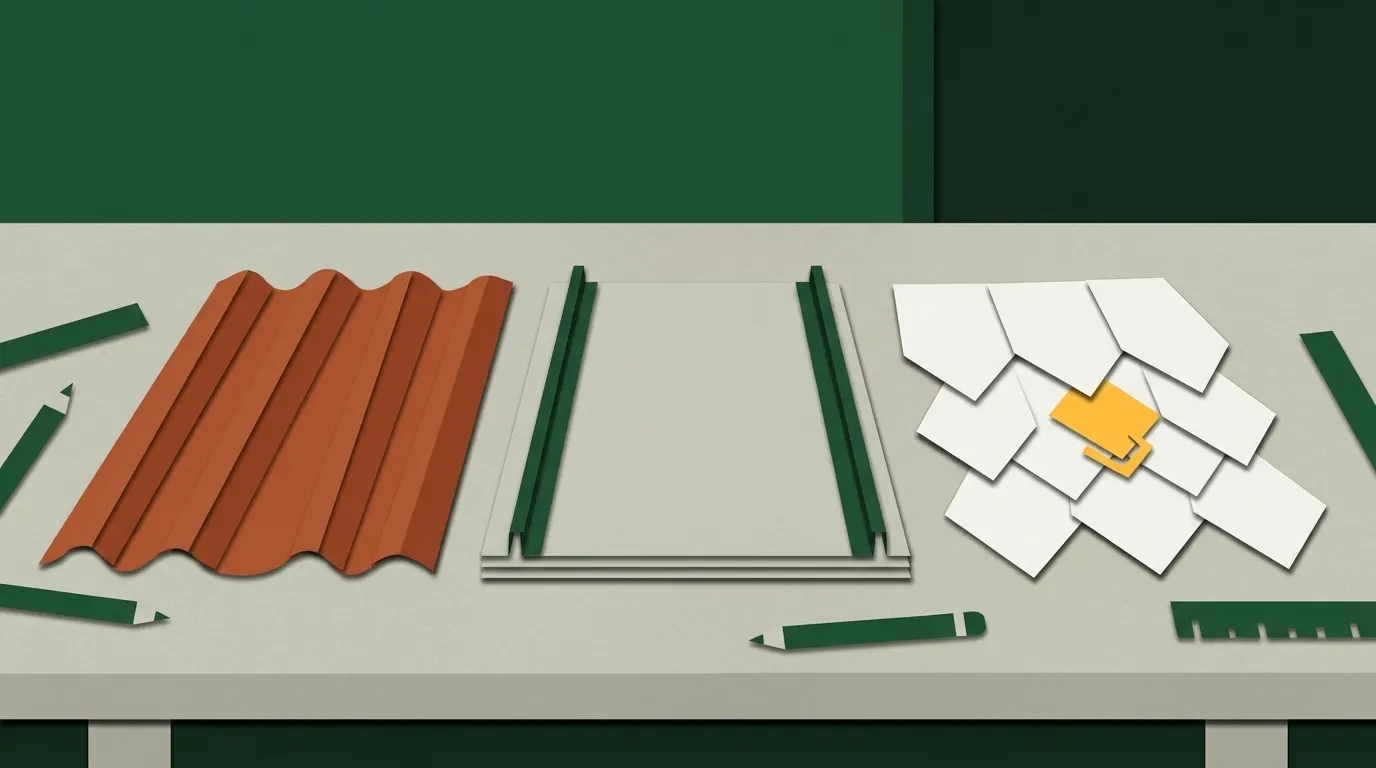
Three types cover most homes. Corrugated panels are wavy sheets screwed straight to the roof, with the screw heads showing. Standing seam panels are long flat sheets joined by raised seams, with the fasteners hidden underneath. Metal shingles are smaller stamped pieces made to look like shingles, slate or shakes.
| Option | Low | Typical | High | Unit |
|---|---|---|---|---|
| Corrugated * | $3.50 | $5.25 | $7.00 | /sq ft |
| Metal shingles | $6.50 | $12 | $17 | /sq ft |
| Standing seam | $7.50 | $15 | $22 | /sq ft |
* Limited data: one source, sources that disagree widely, or a single figure.
For our 2,000 sq ft example, the totals by type are:
- Corrugated: $7,000–$14,000, typical $10,500
- Metal shingles: $13,000–$33,900, typical $23,400
- Standing seam: $15,000–$43,800, typical $29,400
Corrugated has the fewest sources behind it, and they disagree a lot, so its row is marked as limited data. Standing seam has the most sources of any type, six, which makes it the firmest number on this page even though its range is wide.
What affects the price
Metal type
The type sets both lines of the bill. Going from corrugated to standing seam nearly triples the typical price on our example, from $10,500 to $29,400. Part of that is the panel itself and part is labor: standing seam panels are cut and seamed with care, and the hidden fasteners take more time than screws through the face.
Roof area
Every line is priced per square foot, so a bigger roof costs more in direct proportion. A complicated roof with valleys, hips and dormers also wastes more metal and takes more cuts than a plain gable roof of the same size. That doesn't show up as a separate line, and it's one reason the high number sits far above typical.
Labor
Metal roofing labor runs $3.00–$12 per square foot in one source, typical $7.50, and another gives $2.95–$11 for standing seam, typical $6.94. A third prices labor by the square at $350–$400, typical $380. Each of these comes from a single source, but they point the same way: on a metal roof, you pay as much for the crew's skill as for the panels.
Roof pitch
Steep roofs take more safety setup and slower work. Our sources say pitch raises the cost but don't give a number, so the calculator shows the same range for low, medium and steep. If your roof is steep, plan toward the high end and ask each roofer how the pitch changes their price.
Tearing off the old roof
This calculator prices the new metal roof only. Old roof removal runs $1,000–$7,400 in one source, typical $4,200, and tear-off runs $1,200–$3,000 in another, typical $2,100. Both are single-source figures. If a roofer suggests leaving the old roof in place, ask what that means for inspecting the decking underneath, and check local rules.
The permit
None of our metal roof sources give a separate permit fee, so this calculator doesn't add one. Many cities require a permit for a new roof. Ask each roofer who pulls it and whether the fee is in the quote.
Metal roof or shingles?
If you're still deciding between metal and shingles, run both. Our roofing calculator prices asphalt and architectural shingles, tile, flat roofs and a general metal option for the same roof, and it includes tear-off and the permit. Its metal figure is a blend across metal types, so it won't match this page exactly. Use this page once you know which metal you want.
For a low-slope or flat roof, metal is rarely the only option. The flat roof replacement cost calculator prices membrane roofs.
Metal roof cost by state
Labor is the larger part of a metal roof, so local construction wages explain most of the gap between states. For our 2,000 sq ft standing seam example, the typical price runs from $25,000 in Oklahoma, $25,700 in Mississippi and $25,800 in New Mexico to $35,300 in Minnesota and $36,800 in Illinois and New Jersey.
- Alabama$25,900
- Alaska$33,600
- Arizona$26,300
- Arkansas$26,100
- California$32,600
- Colorado$28,100
- Connecticut$31,100
- Delaware$30,100
- District of Columbia$32,100
- Florida$26,700
- Georgia$26,600
- Hawaii$32,100
- Idaho$29,600
- Illinois$36,800
- Indiana$29,600
- Iowa$26,500
- Kansas$26,100
- Kentucky$26,300
- Louisiana$26,600
- Maine$27,400
- Maryland$31,100
- Massachusetts$34,600
- Michigan$30,100
- Minnesota$35,300
- Mississippi$25,700
- Missouri$26,800
- Montana$30,000
- Nebraska$25,900
- Nevada$27,600
- New Hampshire$30,500
- New Jersey$36,800
- New Mexico$25,800
- New York$33,500
- North Carolina$27,000
- North Dakota$30,200
- Ohio$26,700
- Oklahoma$25,000
- Oregon$31,100
- Pennsylvania$29,400
- Rhode Island$30,900
- South Carolina$26,000
- South Dakota$26,500
- Tennessee$25,900
- Texas$26,200
- Utah$26,900
- Vermont$30,200
- Virginia$27,300
- Washington$31,500
- West Virginia$27,600
- Wisconsin$29,900
- Wyoming$25,800
The state factor tracks wages and prices, not how many metal roofing crews work near you. If you get only one or two bids, widen the search before you decide the number is fair.
Ways to lower the cost
- Match the metal to the building. Corrugated panels cost a fraction of standing seam and suit many porches, sheds and simple homes.
- Keep the roof simple. Fewer cuts, valleys and penetrations mean less wasted metal and less labor.
- Price tear-off on its own. Ask each roofer for the roof with and without removal, so you see what that line costs.
- Compare the same gauge and finish. Thinner metal or a basic finish quotes lower; make sure every bid uses the same specs.
- Ask about timing. If your date is flexible, ask whether a slower month changes the price.
Hiring tips
Look for roofers who install metal regularly, not only shingles, and ask to see metal roofs they've finished nearby. Ask at least three of them to quote the same roof: area, metal type, gauge (metal thickness), finish and whether tear-off is included. Each quote should list panels, trim and flashing, underlayment, labor, tear-off and disposal, and the permit as separate lines. Compare those lines with the breakdown above.
Ask how the panels are fastened, how the crew handles expansion as the metal heats and cools, and how they flash around chimneys and vents. Get both warranties in writing: the manufacturer's on the panels and finish, and the roofer's on the work. Check that the company has a license where your state requires one, and ask for proof of insurance. Bring the ballpark. Ask for the line items.
More exterior jobs are on Roof & Exterior cost calculators, including the gutter installation cost calculator and the siding cost calculator.