National ballpark · 2,000 sq ft of vinyl siding on a one-story house
This is a planning range, not a quote.
Limited data: siding permit (sources disagree). The real range may be wider.
Removing old siding is extra and usually priced per job; ask whether it is in the quote.
| Cost | Low | Typical | High |
|---|---|---|---|
| Materials | $3,300 | $7,700 | $12,100 |
| Labor | $2,700 | $6,300 | $9,900 |
| Permit (varies by city) national | $150 | $290 | $1,500 |
| Total | $6,150 | $14,300 | $23,500 |
How this siding cost calculator works
Enter your ZIP code, the wall area in square feet, the siding material and the number of stories. The calculator multiplies the area by an installed price per square foot for that material, adds an access charge if the house has more than one story, adds a permit, then adjusts the total for wages and prices in your state.
The area is the wall surface you're covering, not the floor area of the house. A rough way to get it is to multiply the length of each wall by its height, add the triangles under the gables and subtract large openings like garage doors. Contractors often quote in squares, where one square is 100 sq ft of wall. If you already have a measured figure from a contractor, use that.
The breakdown splits the estimate into materials and labor. Our sources put labor at somewhere between two-fifths and more than half of a siding job, so the calculator uses 45%. Wages and regional price levels then shift each part for your state. Permit fees stay at the national range, because cities set them. The full method is on our How we calculate page.
Siding cost by material
Material sets the price per square foot. Engineered wood and vinyl sit at the bottom on typical price, wood and fiber cement in the middle, and brick veneer well above the rest.
| Option | Low | Typical | High | Unit |
|---|---|---|---|---|
| Brick veneer * | $8.00 | $15 | $18 | /sq ft |
| Engineered wood | $1.00 | $5.25 | $9.50 | /sq ft |
| Fiber cement * | $6.00 | $10 | $14 | /sq ft |
| Stucco | $7.00 | $8.50 | $10 | /sq ft |
| Vinyl | $3.00 | $7.00 | $11 | /sq ft |
| Wood * | $5.50 | $9.00 | $15 | /sq ft |
* Limited data: one source, sources that disagree widely, or a single figure.
On 2,000 sq ft of wall on a one-story house, including the permit, that works out to:
- Engineered wood: $2,150–$20,500, typical $10,800
- Vinyl: $6,150–$23,500, typical $14,300
- Stucco: $14,200–$21,500, typical $17,300
- Wood: $11,200–$30,500, typical $18,300
- Fiber cement: $12,200–$29,500, typical $20,300
- Brick veneer: $16,200–$37,500, typical $30,300
Our sources disagree widely on brick veneer, fiber cement and wood, so treat those ranges as rough guides. The low end for engineered wood, $1 per square foot, sits far below the rest of its range; I wouldn't plan a budget on it.
Choosing a siding material
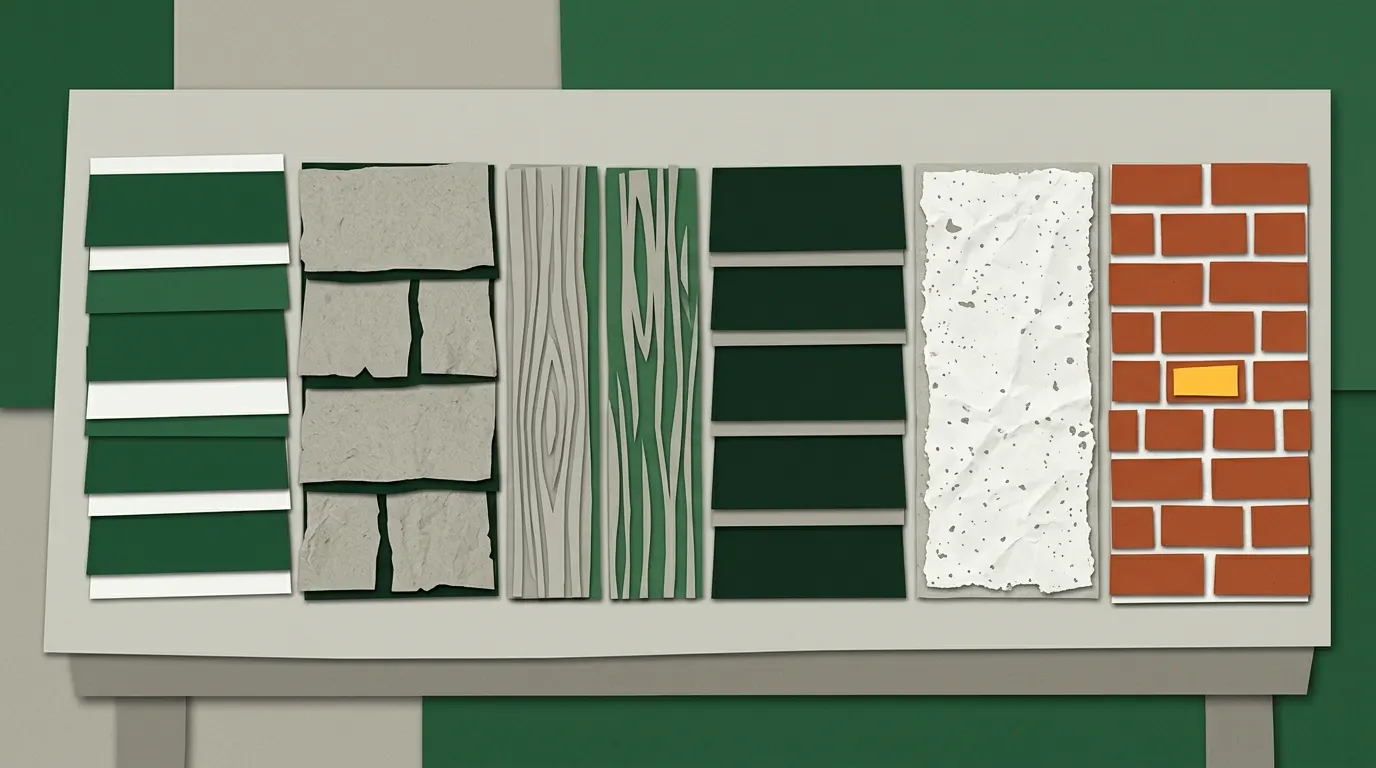
Vinyl is plastic siding made in long panels that lock together. It doesn't need paint and goes up quickly, which keeps labor down. It can crack on impact and fade over time, and color choices are set by the maker. The vinyl siding cost calculator goes deeper on this one material.
Fiber cement is a mix of cement, sand and wood fibers pressed into boards. It's heavy, takes more labor and special cutting tools, and is usually painted, either at the factory or after install. It resists rot and insects better than wood.
Wood covers cedar boards, shingles and shakes. It looks the most traditional and costs more to keep up, because it needs stain or paint on a schedule.
Engineered wood is wood strands or fibers bonded with resin into boards that look like wood. It's lighter than fiber cement and usually comes primed or prefinished.
Stucco is a cement plaster applied wet over the wall in layers. It's common in dry, warm regions and needs skilled hands to apply. The stucco cost calculator covers it in detail.
Brick veneer is a single layer of real brick laid in front of the wall framing. It's masonry work, which explains its higher price.
What affects the price
Material
Material is the biggest lever. Moving from vinyl to fiber cement raises the typical price on our example from $14,300 to $20,300. Moving to brick veneer roughly doubles it, to a typical $30,300.
Wall area
The siding cost grows in a straight line with the area: double the square feet, double that part of the bill. The access charge and the permit don't change with area. Measure carefully, because a few hundred square feet either way shifts the estimate by thousands of dollars in most materials.
Stories
The calculator adds $500–$2,500 for a two- or three-story house, typical $1,500, to cover ladders, scaffolding and slower work up high. That figure comes from one source. On our vinyl example a second story brings the total to $6,650–$26,000, typical $15,800. Our data uses the same charge for three stories, so a tall house may come in higher.
Removing the old siding
The calculator doesn't price tear-off. Removing old siding usually adds $1,000–$2,500 for a whole house, typical $2,290, from two sources. Heavy materials cost more to strip: one source puts old brick removal at $3–$6 per square foot. Some contractors can install new vinyl over old siding, which skips this step, but it isn't always a good idea if the wall underneath needs work.
Labor
Two sources put siding labor at $47–$75 per hour, typical $61. Materials that need masonry or plaster skills, like brick and stucco, cost more to install than panel siding.
Trim, soffits and repairs
Corner boards, window trim, soffits (the underside of the roof overhang) and fascia (the board along the roof edge) are often priced as separate lines. So is any rotten sheathing found once the old siding comes off. Our data doesn't price these, which is one reason the high end sits well above the typical number.
When to budget toward the high end
The typical price assumes a simple one-story shape, a sound wall under the old siding and easy access all around the house. Plan toward the high number if the house has many corners, gables or windows, if parts of it are two or more stories, if you want a premium profile or a custom color, or if you suspect soft spots in the wall. Expect the high end too if the old siding is brick, stucco or wood shake, because those take longer to remove.
Siding cost by state
Labor is close to half of a siding bill, so local wages explain most of the difference between states. For our 2,000 sq ft vinyl example, the typical price runs from $12,400 in Oklahoma, $12,500 in Arkansas and $12,600 in South Dakota to $16,300 in California, $16,500 in Illinois and $17,700 in Hawaii.
- Alabama$12,700
- Alaska$16,200
- Arizona$13,700
- Arkansas$12,500
- California$16,300
- Colorado$14,400
- Connecticut$14,400
- Delaware$13,800
- District of Columbia$14,900
- Florida$13,000
- Georgia$13,000
- Hawaii$17,700
- Idaho$13,100
- Illinois$16,500
- Indiana$14,200
- Iowa$13,500
- Kansas$13,500
- Kentucky$13,200
- Louisiana$12,700
- Maine$14,200
- Maryland$14,700
- Massachusetts$15,700
- Michigan$14,100
- Minnesota$14,800
- Mississippi$12,800
- Missouri$14,000
- Montana$13,800
- Nebraska$12,800
- Nevada$14,200
- New Hampshire$14,200
- New Jersey$15,200
- New Mexico$13,900
- New York$16,100
- North Carolina$12,800
- North Dakota$13,700
- Ohio$13,800
- Oklahoma$12,400
- Oregon$14,900
- Pennsylvania$14,100
- Rhode Island$14,100
- South Carolina$13,000
- South Dakota$12,600
- Tennessee$13,000
- Texas$12,900
- Utah$13,200
- Vermont$14,300
- Virginia$13,800
- Washington$16,000
- West Virginia$12,800
- Wisconsin$14,000
- Wyoming$13,500
Ways to lower the cost
- Measure the real wall area. Floor area overstates it on most houses and inflates every quote.
- Compare two materials. Vinyl and engineered wood often come in well under fiber cement for the same wall.
- Side the most visible walls in the premium material and use a cheaper one on the back of the house, if your HOA allows mixed materials.
- Ask whether tear-off is needed. If the old siding is flat and sound, ask what installing over it would cost and what it would hide.
- Keep trim simple. Decorative trim, shakes in the gables and custom colors each add lines to the quote.
Hiring tips
Get at least three written quotes for the same job: the same wall area, material, profile and color. Ask each contractor to list materials, labor, tear-off and disposal, trim and soffit work, house wrap and the permit as separate lines, then compare them with the breakdown above. A quote far below our low number deserves questions about what's left out.
Ask how the contractor measured the walls and whether the area matches yours. Find out what happens if the crew finds rot behind the old siding, and get the price for repairs per sheet or per square foot in writing before work starts. Ask how windows and doors will be flashed and trimmed. Check that the company has a license where your state requires one, and ask for proof of insurance. Bring the ballpark. Ask for the line items.
Related calculators
Siding often goes with other exterior work. The roofing calculator and the gutter installation cost calculator price the jobs above the walls, and the window replacement cost calculator prices new windows if you're opening the walls anyway. More exterior jobs are on the Roof & Exterior page.