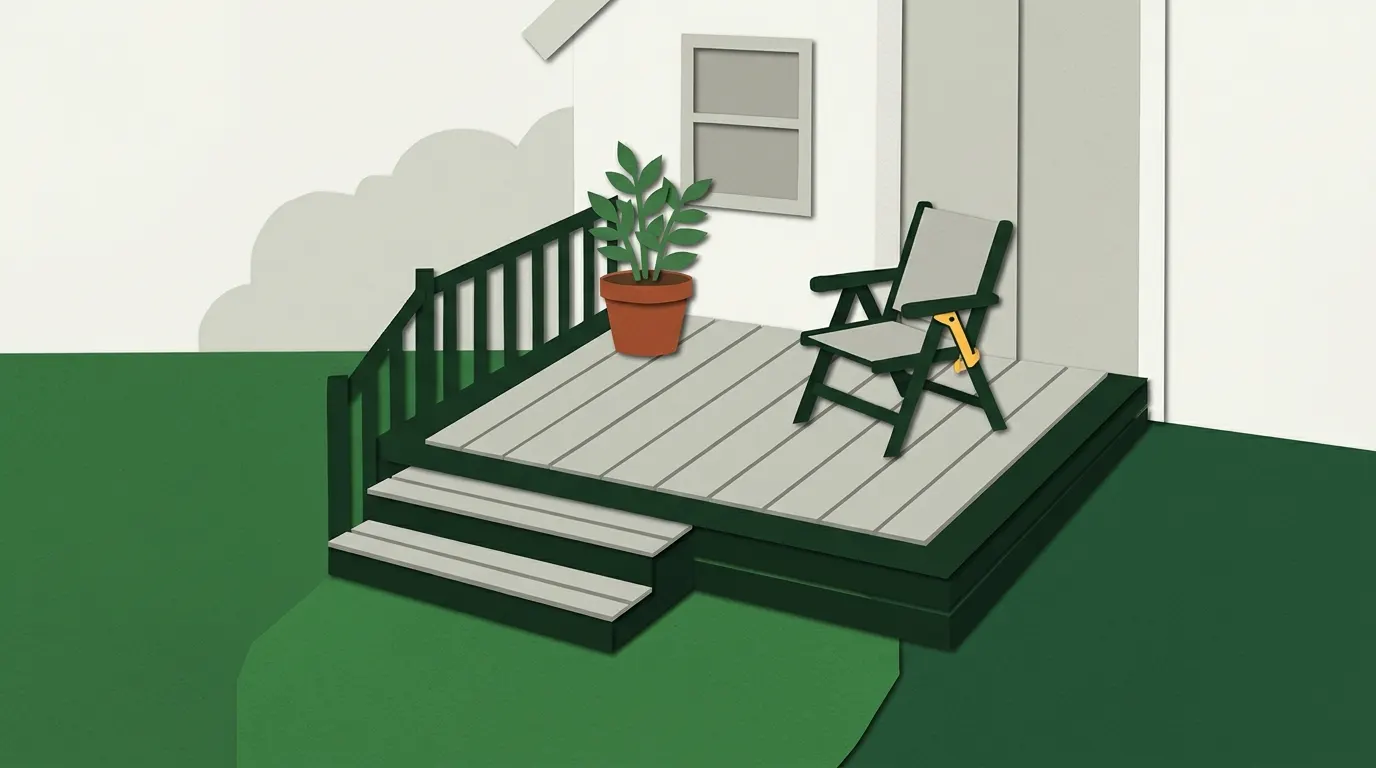
This page covers decks built with composite boards. To compare composite with pressure-treated wood, cedar and PVC, use the main deck cost calculator. Composite decking is a board made from wood fiber and plastic, pressed into a plank shape and usually given a wood-grain surface.
National ballpark · a 320 sq ft (16 x 20 ft) composite deck
This is a planning range, not a quote.
Limited data: deck permit (sources disagree). The real range may be wider.
| Cost | Low | Typical | High |
|---|---|---|---|
| Materials | $3,200 | $4,930 | $6,660 |
| Labor | $4,800 | $7,390 | $9,980 |
| Permit (varies by city) national | $200 | $350 | $500 |
| Total | $8,200 | $12,700 | $17,100 |
How the composite deck cost calculator works
Here the decking is set to composite. Enter your ZIP code, the deck's area in square feet, the height, the feet of railing and whether you need stairs. The calculator multiplies the area by an installed composite price per square foot, adds railing per linear foot, adds a set of stairs if you tick the box and adds a permit fee. Then it adjusts the materials and labor for your state.
On the 320 sq ft example, the breakdown shows materials at $3,200–$6,660 (typical $4,930), labor at $4,800–$9,980 (typical $7,390) and the permit at $200–$500 (typical $350). The split assumes labor is about 60% of a deck job, an average of what several sources report. The permit isn't adjusted by state, because cities set the fee. The method is explained on How we calculate.
The result is a planning range, not a quote. A builder on site will see your yard's slope, soil and access.
Composite deck cost per square foot
Installed, composite decking costs $25–$52 per square foot, typical $39. Five sources price it this way, more than any other deck material in our data, so this is one of our firmer deck numbers. The low end fits a plain rectangle with standard boards; the high end fits premium boards, more framing and harder sites.
| Option | Low | Typical | High | Unit |
|---|---|---|---|---|
| Cedar | $20 | $36 | $52 | /sq ft |
| Composite | $25 | $39 | $52 | /sq ft |
| Pressure-treated wood | $12 | $25 | $38 | /sq ft |
| Pvc * | $17 | $25 | $33 | /sq ft |
* Limited data: one source, sources that disagree widely, or a single figure.
Board prices alone show where the money goes. Composite boards run $5.00–$14 per square foot, typical $9.45, from six sources. The rest of the installed price is framing lumber, fasteners, footings and labor. One source puts an all-in composite deck nearer $73 per square foot, which sits above our range; it's a single figure, so we don't build it in, but it's a reminder that a complex deck can pass the high number.
Composite against wood and PVC
On the same 320 sq ft deck with no railing or stairs:
- Composite: $8,200–$17,100, typical $12,700
- Cedar: $6,440–$17,100, typical $11,800
- PVC: $5,640–$11,100, typical $8,350, from one source only
- Pressure-treated wood: $3,880–$12,500, typical $8,190
At the typical price, composite costs about half again as much as pressure-treated wood. The high ends are closer: premium cedar reaches the same $17,100 as composite. PVC looks cheaper here, but only one source prices installed PVC decks, and PVC boards on their own cost $5.00–$13 per square foot, close to composite. I'd get quotes on both if you're choosing between them.
What upkeep the extra cost covers
Composite doesn't need staining, sealing or painting, and it won't splinter. Most of its care is washing off dirt, pollen and leaves with water and a soft brush. That's the main reason people pay more upfront.
Composite has its own trade-offs. Darker boards can get hot in full sun, some boards show scratches, and a deck in deep shade may need more cleaning. Our data doesn't price cleaning or repairs, so none of this is in the estimate. Ask the builder about the board maker's warranty and what it covers.
What affects the price
Deck size
The installed rate applies to every square foot, so a bigger deck raises the main line in step. Stairs and the permit stay the same whatever the size. Composite boards come in fixed lengths, and a layout that wastes fewer cut-offs can save a little on boards.
Height
The height input doesn't change the estimate, because our sources price height and decking material in separate tables and none combine them. A deck at ground level costs $10–$20 per square foot in the height table, and a second-story deck $40–$50. A raised composite deck needs the same tall posts, beams and footings as a raised wood deck, so plan toward the high end or above.
| Option | Low | Typical | High | Unit |
|---|---|---|---|---|
| Ground level | $10 | $15 | $20 | /sq ft |
| Raised * | $25 | $38 | $50 | /sq ft |
| Second story | $40 | $45 | $50 | /sq ft |
* Limited data: one source, sources that disagree widely, or a single figure.
Framing under the boards
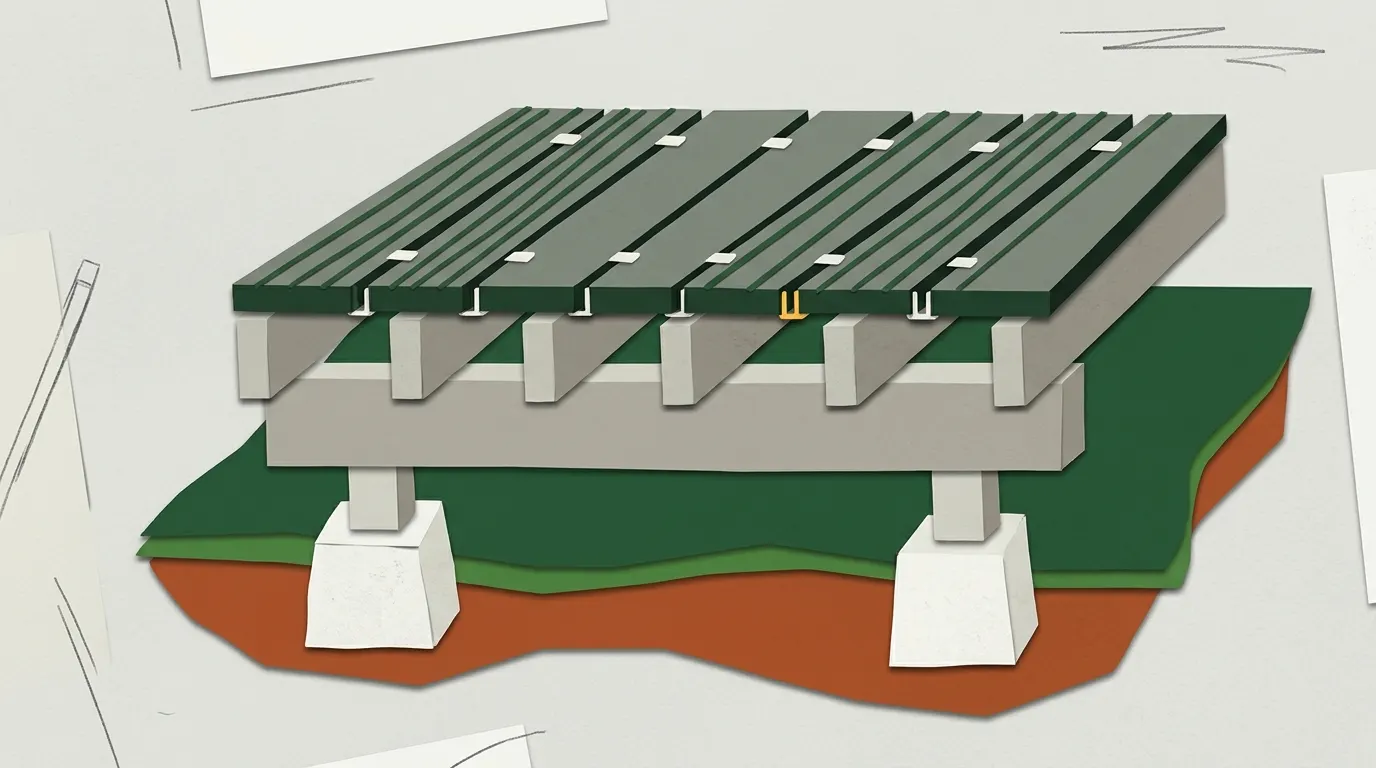
Most composite decks still sit on a frame of treated lumber. Composite boards are often laid on joists spaced closer together than wood boards need, which adds framing lumber and labor. Ask each builder what joist spacing they plan and whether the old frame can be reused on a resurfacing job.
Railing
Installed railing adds $35–$68 per linear foot, typical $51, from sources that disagree a lot. One source prices railing materials alone at $25–$100 per linear foot. Composite railings that match the boards, and metal or glass railings, tend to sit at the high end.
Stairs
Ticking stairs adds $150–$1,500, typical $1,500, and takes our example to $8,350–$18,600 (typical $14,200). Sources price everything from one step to a full flight, so treat this line as rough and describe your stairs on every quote.
Hidden fasteners and borders
Clips that hold boards from the side keep screw heads off the surface, and a border board around the edge gives a finished look. Both add labor. Our data doesn't price them separately; they're part of why the high end sits well above typical.
Composite deck cost by state
About 60% of a composite deck bill is labor, so wages explain most of the gap between states. For our 320 sq ft example, the typical price runs from $10,700 in Oklahoma, $10,800 in Arkansas and $10,900 in South Dakota to $14,800 in California, $15,100 in Illinois and $16,300 in Hawaii.
- Alabama$11,000
- Alaska$14,600
- Arizona$12,200
- Arkansas$10,800
- California$14,800
- Colorado$12,900
- Connecticut$13,000
- Delaware$12,300
- District of Columbia$13,100
- Florida$11,300
- Georgia$11,200
- Hawaii$16,300
- Idaho$11,400
- Illinois$15,100
- Indiana$12,700
- Iowa$12,000
- Kansas$11,900
- Kentucky$11,500
- Louisiana$11,100
- Maine$12,700
- Maryland$13,100
- Massachusetts$14,400
- Michigan$12,600
- Minnesota$13,200
- Mississippi$11,000
- Missouri$12,500
- Montana$12,300
- Nebraska$11,100
- Nevada$12,700
- New Hampshire$12,700
- New Jersey$13,400
- New Mexico$12,400
- New York$14,500
- North Carolina$11,100
- North Dakota$12,100
- Ohio$12,400
- Oklahoma$10,700
- Oregon$13,200
- Pennsylvania$12,500
- Rhode Island$12,600
- South Carolina$11,300
- South Dakota$10,900
- Tennessee$11,300
- Texas$11,100
- Utah$11,500
- Vermont$12,800
- Virginia$12,100
- Washington$14,500
- West Virginia$11,100
- Wisconsin$12,500
- Wyoming$12,000
Ways to lower the cost
- Choose a mid-range board. Board prices alone span $5.00–$14 per square foot.
- Use composite only on top. A treated-lumber frame under composite boards is the usual approach.
- Skip the border and pattern work if a plain run of boards suits you.
- Keep the rail simple. A matching composite or metal rail costs less than glass.
- Plan board lengths. Ask the builder to lay out the deck to cut less waste.
Hiring tips
Get at least three written quotes for the same composite deck: same size, board line, color, railing length and stairs. Ask each builder to list boards, framing lumber, fasteners, footings, railing, stairs, the permit and any removal as separate lines, then check them against the breakdown above.
Ask which fastening system they'll use, what joist spacing the board maker requires and whether following it keeps the board warranty valid. Confirm who pulls the permit and books the inspections. Get the schedule, payment terms and the builder's own workmanship warranty in writing. Check that the company has a license where your state requires one, and ask for proof of insurance. Bring the ballpark. Ask for the line items.