This page covers vinyl siding only. To compare it with fiber cement, wood, stucco and brick, use the main siding cost calculator. Vinyl siding is made of PVC, a rigid plastic, formed into long panels that hook onto the panel below and nail to the wall through slots at the top edge.
National ballpark · 2,000 sq ft of vinyl siding on a one-story house
This is a planning range, not a quote.
Limited data: siding permit (sources disagree). The real range may be wider.
Removing old siding is extra and usually priced per job; ask whether it is in the quote.
| Cost | Low | Typical | High |
|---|---|---|---|
| Materials | $3,300 | $7,700 | $12,100 |
| Labor | $2,700 | $6,300 | $9,900 |
| Permit (varies by city) national | $150 | $290 | $1,500 |
| Total | $6,150 | $14,300 | $23,500 |
How the vinyl siding cost calculator works
The material is fixed to vinyl here. You enter a ZIP code, the wall area and the number of stories. The calculator multiplies the area by an installed vinyl price per square foot, adds an access charge for a second or third story, adds a permit and adjusts the result for your state.
On the 2,000 sq ft example, the breakdown shows materials at $3,300–$12,100, typical $7,700, and labor at $2,700–$9,900, typical $6,300, plus a permit at $150–$1,500, typical $290. The split assumes labor is 45% of the job. That share comes from sources covering siding in general, so on a fast vinyl install labor may be a little lower. More on the method is on How we calculate.
Vinyl siding cost per square foot
Installed, vinyl runs $3–$11 per square foot, typical $7. Seven sources price vinyl, and their figures agree more closely than they do for fiber cement or wood, so this is one of our firmer siding numbers.
| Option | Low | Typical | High | Unit |
|---|---|---|---|---|
| Brick veneer * | $8.00 | $15 | $18 | /sq ft |
| Engineered wood | $1.00 | $5.25 | $9.50 | /sq ft |
| Fiber cement * | $6.00 | $10 | $14 | /sq ft |
| Stucco | $7.00 | $8.50 | $10 | /sq ft |
| Vinyl | $3.00 | $7.00 | $11 | /sq ft |
| Wood * | $5.50 | $9.00 | $15 | /sq ft |
* Limited data: one source, sources that disagree widely, or a single figure.
Two sources price the panels alone at $3.16–$5 per square foot. Their averages sit at the bottom of their own ranges, so the low and typical material prices are the same. Two sources put vinyl labor at $2–$5 per square foot, typical $3.50. The typical panel and labor prices together land close to the typical installed price, a sign the numbers hang together.
Why vinyl prices vary so much
The $3–$11 range is wide because "vinyl siding" covers very different products.
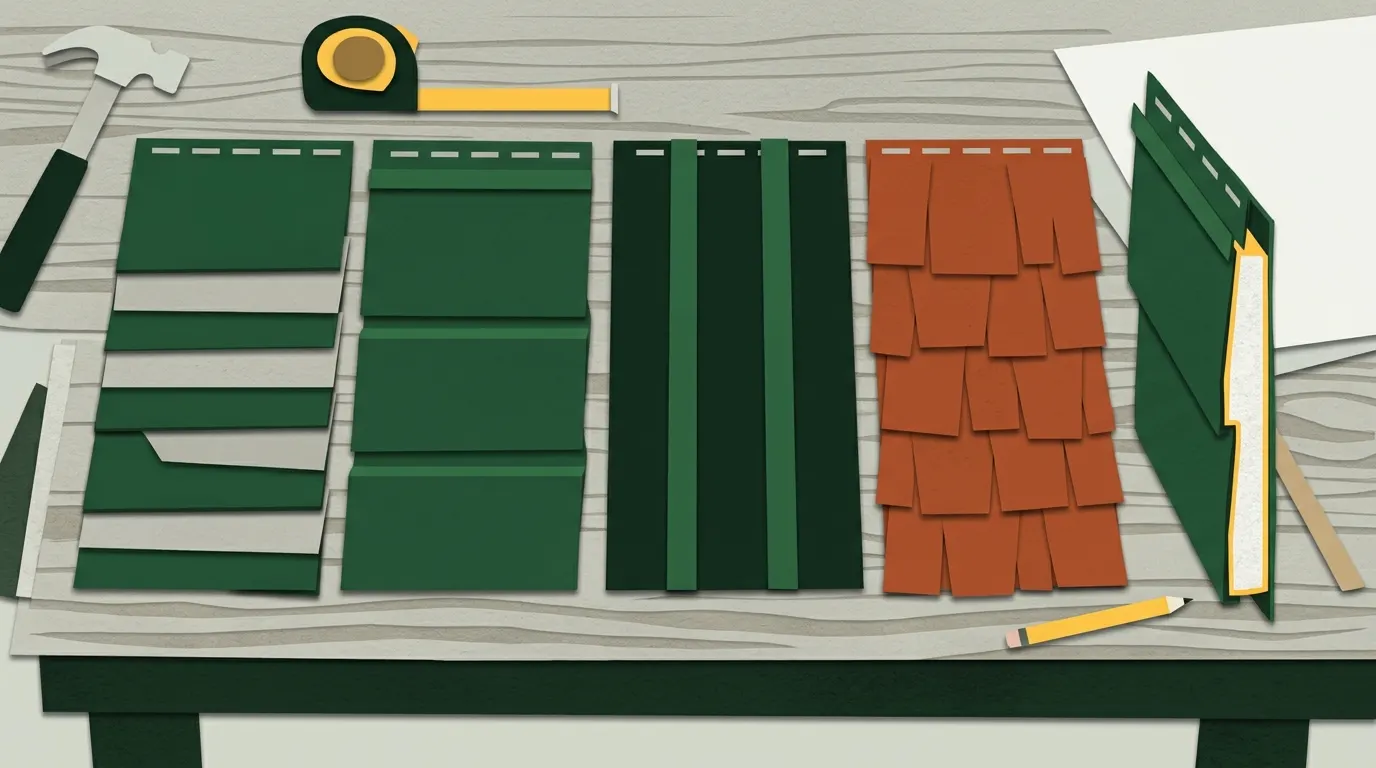
Panel thickness. Thicker panels are stiffer, stay flatter on the wall and hold up better to bumps. Builder-grade panels are thin; premium panels are noticeably heavier in the hand. Ask each contractor which thickness they're quoting.
Insulated vinyl. Some panels have rigid foam bonded to the back. They cost more than standard vinyl and lie flatter on uneven walls.
Profile. Plain clapboard lap is the most common and usually the cheapest. Dutch lap, board-and-batten, and shake or scallop panels for gables cost more per square foot, and mixing profiles on one house adds cutting and trim work.
Color. Darker colors use pigments that resist fading, and they usually cost more than white, cream or light grey.
Our data doesn't split vinyl by any of these, so a basic white clapboard job tends to sit near the low or typical price, and a premium insulated panel in a dark color near the top.
Vinyl compared with other siding
Here's how vinyl lines up on the same 2,000 sq ft, one-story example, permit included:
- Engineered wood: typical $10,800
- Vinyl: $6,150–$23,500, typical $14,300
- Stucco: typical $17,300
- Wood: typical $18,300
- Fiber cement: typical $20,300
- Brick veneer: typical $30,300
Vinyl's main selling points are low upkeep and quick installation. It doesn't need paint, and washing it with a hose and a soft brush covers most care. Its weak spots are impact damage, warping near heat sources like grills, and fading on sunny walls. A cracked panel can be unlocked and replaced, but matching an older color later can be hard. If you're weighing a heavier material, the stucco cost calculator runs the same inputs for stucco.
What affects the price
Wall area
The vinyl line moves in step with the area. Every square you add, 100 sq ft of wall, brings its own panels, trim and labor. Gables, dormers and bump-outs add area that's easy to miss when you measure only the long walls.
Stories
A second story adds $500–$2,500 for access, typical $1,500, based on one source. That brings the vinyl example to $6,650–$26,000, typical $15,800. Our data applies the same charge to a three-story house, so expect quotes for a tall house to come in above it.
Tear-off or overlay
The calculator assumes no tear-off. One source puts removal of old vinyl siding at $1–$2 per square foot, typical $1.50. Installing over sound, flat siding avoids that cost, but it can hide rot and makes the wall thicker around windows and doors, which then need deeper trim.
Trim and accessories
Vinyl needs its own trim: J-channel (a U-shaped strip that holds panel ends around windows and doors), corner posts, starter strips and soffit vents. Some contractors include these in the square-foot price and some list them separately. Our data doesn't price them.
The wall underneath
Once old siding comes off, the crew may find damaged sheathing, missing house wrap or soft spots around windows. These repairs aren't in our data, and they're the most common reason a final bill rises above the quote.
Vinyl siding cost by state
Labor is close to half of the bill, so wages drive most of the difference between states. For the 2,000 sq ft example, the typical vinyl price runs from $12,400 in Oklahoma, $12,500 in Arkansas and $12,600 in South Dakota to $16,300 in California, $16,500 in Illinois and $17,700 in Hawaii.
- Alabama$12,700
- Alaska$16,200
- Arizona$13,700
- Arkansas$12,500
- California$16,300
- Colorado$14,400
- Connecticut$14,400
- Delaware$13,800
- District of Columbia$14,900
- Florida$13,000
- Georgia$13,000
- Hawaii$17,700
- Idaho$13,100
- Illinois$16,500
- Indiana$14,200
- Iowa$13,500
- Kansas$13,500
- Kentucky$13,200
- Louisiana$12,700
- Maine$14,200
- Maryland$14,700
- Massachusetts$15,700
- Michigan$14,100
- Minnesota$14,800
- Mississippi$12,800
- Missouri$14,000
- Montana$13,800
- Nebraska$12,800
- Nevada$14,200
- New Hampshire$14,200
- New Jersey$15,200
- New Mexico$13,900
- New York$16,100
- North Carolina$12,800
- North Dakota$13,700
- Ohio$13,800
- Oklahoma$12,400
- Oregon$14,900
- Pennsylvania$14,100
- Rhode Island$14,100
- South Carolina$13,000
- South Dakota$12,600
- Tennessee$13,000
- Texas$12,900
- Utah$13,200
- Vermont$14,300
- Virginia$13,800
- Washington$16,000
- West Virginia$12,800
- Wisconsin$14,000
- Wyoming$13,500
Ways to lower the cost
- Stick to one profile. Plain lap siding on every wall cuts waste and trim work.
- Pick a light color. Whites and light neutrals usually cost less than dark, fade-resistant colors.
- Ask about overlay if the old siding is flat and dry, and ask the contractor to show you why it is or isn't a good fit.
- Compare panel grades side by side. Ask for two prices: a mid-grade panel and a premium one.
- Bundle exterior work. If gutters or trim are also due, ask for one quote so the crew sets up once.
Hiring tips
Get at least three written quotes for the same vinyl job: the same wall area, panel thickness, profile and color. Ask each contractor to name the panel line and thickness, whether insulated panels are included, and how they handle trim and soffits. Tear-off, disposal, house wrap and the permit should appear as separate lines you can check against the breakdown above.
Ask how the crew nails the panels. Vinyl expands and contracts with heat, so it should hang loosely enough to move; panels nailed too tight can buckle on a hot day. I'd also ask what the warranty covers, whether it's the maker's or the installer's, and whether it transfers if you sell the house. Check for a license where your state requires one and for proof of insurance. Bring the ballpark. Ask for the line items.